A Conversation About...

A Conversation about
Defining Compassionate Care in Education

Episode Description

This week kicks off a new month of conversations all about compassion. Heather sits down with her longtime friend and school social worker, Waddell, to talk about what compassionate care really means—not as a checklist or a professional buzzword, but as a way of seeing and treating people.

They talk about showing up with empathy, choosing kindness even when it’s hard, and honoring kids’ humanity in classrooms where life can feel anything but fair. From personal stories to lessons learned in schools and beyond, this episode reminds us that compassion is a choice we make every day—to notice, to listen, and to treat people like people.

Key Points and Takeaways

  • Compassionate care involves treating individuals with affection, humanity, and understanding, whether in a one-on-one setting or a group environment.
  • Emotional intelligence is key for professionals who wish to extend compassion—it requires an active choice to be self-aware, present, and genuinely interested in the experiences of others.
  • Personal experiences often fuel one's ability to empathize and connect with others, driving the intent to see the good or potential in every situation.
  • Kids are adept at detecting authenticity and respond to genuine care and intent, an important consideration for educators and social workers.
  • Acknowledging and respecting a child's insights and experiences are crucial for truly impactful and compassionate engagement.
Podcast Guest

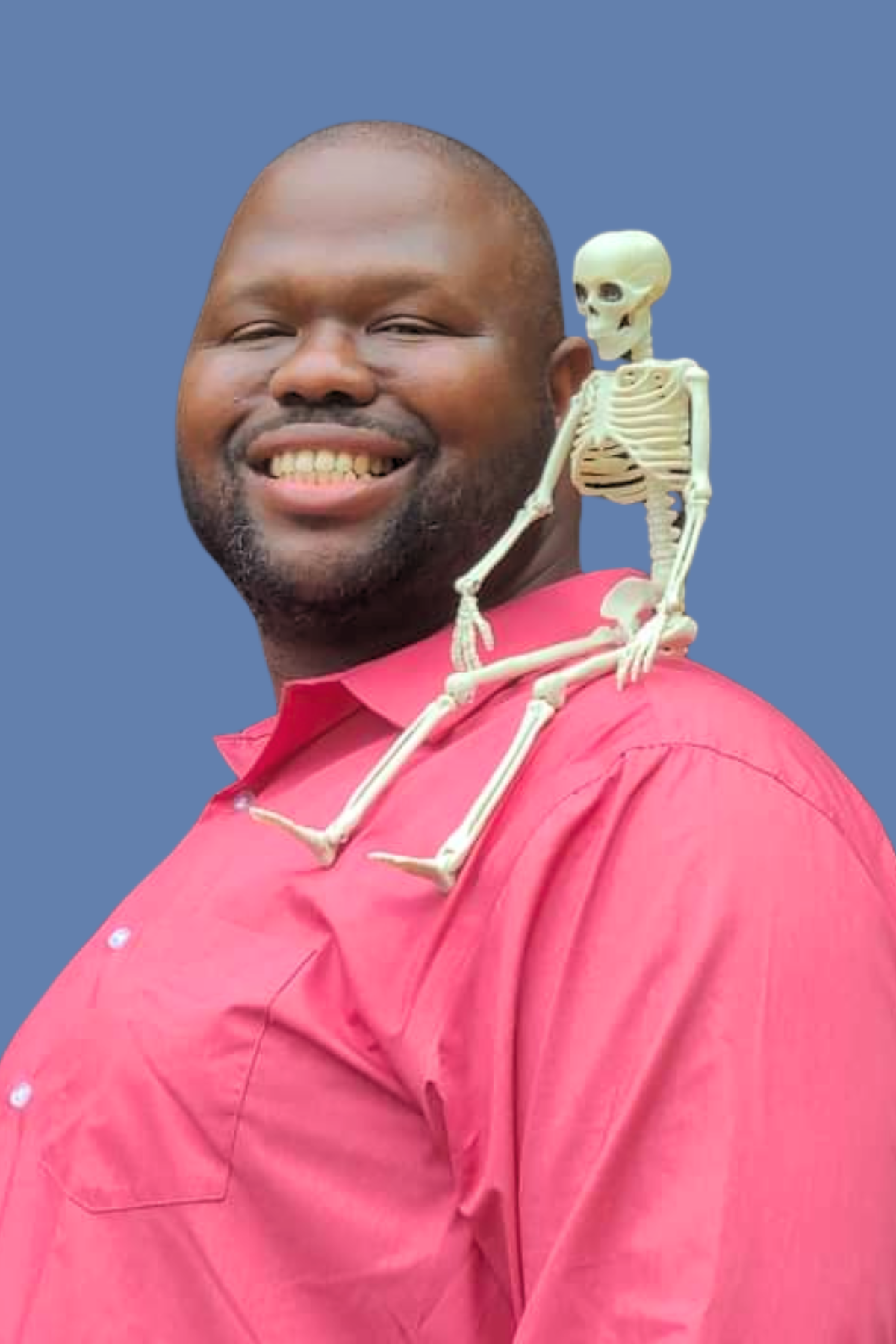
Waddell Hamer,
MSW, LSW

Waddell Hamer is a social worker specializing in motivational interviewing and trauma-informed cognitive behavioral therapy with children and adolescents struggling through depression, anxiety, and trauma. He has been a school-based and home-based life skills clinician with a focus on bridging services between the school and home settings, wraparound facilitator, home-based therapist through the pandemic, therapist for individuals who were victims of violent crimes, and social worker in a community health network. Outside of his professional work, he has worked to establish a NAMI community organization for mental wealth, integrates art and mental health in black and brown communities, and enjoys being the connector between people of his community. Waddell is a Licensed Social Worker with his Bachelors in Political Science and Masters in Social Work.
Looking for CEUs? Click "01 | Listen" below!


Host: Heather Volchko

Guest: Waddell Hamer

Okay. All right, well, welcome back for another month of conversations. This month is all about compassion. So we’re taking the lens of compassionate care, and I’m excited to have Wadell with us. He’s our social worker, a longtime friend of mine out there doing some amazing work on behalf of a bunch of students, kind of walking through some stuff in life. So we’re going to kick it off with just what is compassionate care?

Just in general, it is actually something that comes from the medical field, but with social work and behavior analysis, we sort of live with one foot in the medical field and one in a whole bunch of other places. So let’s kick it off. Waddell, when you think of compassionate care, what is coming up for you?

So when I think of compassionate care, you’re right, it does come from the medical field. But being a social worker, everything we do has to be compassionate. Everything that we do, for me, I work with kiddos or whatever, but even with the parents, even with just the systems that we work within, it has to be with compassionate care. And compassionate care for me means just you’re doing the work that you do, but you do it with a sense of love and affection, and treating people like people.

I do pottery or whatever, and one of the things I put at the bottom of every piece I have is a motto I live by: just treat people like people. And to me, that’s compassionate care. To me, treating people like people. Sometimes that means yourself as well, but treating people like people. So for me, compassionate care, when I’m with a kiddo that’s been through some trauma, when I’m with a parent who is discovering the trauma of what the kid is going through, you go in there with a sense of humanity and humility.

Of course, in a social work world, it’s more trauma-informed care is the phrase that you hear more than compassionate care, but they’re kind of the same lens or whatever. You go in there with the intention of being compassionate and treating them like human beings, treating people like you’re going through stuff, I’m going to walk with you. I’m not going to drag you. I’m not going to be the leader or sage on the stage, which I hate. I’m going to walk with you.

But I love how you’re saying that’s intentional, right? That is a choice that we make as professionals to show up that way and interact in that manner.

Absolutely.

It’s a conscious choice to demonstrate sympathy or empathy or whatever other words you want to throw around it, but just being sensitive to what the other person is going through. And, I mean, if they’re with us, there’s typically a reason for it. Just honoring that and acknowledging that, I mean, you’ll hear me say all the time, just be nice. Whatever. Just be nice. It’s not that complicated, right?

It reminds me of one of the things where I always say love your neighbor,Because unfortunately for a lot of, and myself included, don’t get me wrong, I’m not perfect or whatever, because you get in your emotions, you get in your moods, or whatever the case may be, and you have to remind yourself, you have to be intentional about just being, like you said, being nice.

You have to be intentional about meeting that person where they are and being compassionate and showing that. So in a nutshell, a lot of it, that’s what it means for me. And that’s what I try to do with every client that I meet with. Well, not even just with clients, with anyone. That’s kind of where I try to go.

Well, and that’s where I mean, it is just who you are, right? It’s just how you see people. So it’s natural that that would show up in your practice.

Right.

And I know a pretty big rub that will come from teachers to service providers is like, sure, you can be nice and you can be compassionate and you can do all those things because you only got one person in your office. Right? Like, I’m stuck over here with 30 of them every 45 minutes. Right. Or even more than that now a lot of places. But I guess, is there even a difference? Is there even a difference in terms of how we show up for one person, for their specific needs, or for a group of people that are absolutely going to have all kinds of different needs?

Does compassionate care show up differently in those settings, or is it really just kind of the same intention?

I think it’s kind of the same intention or whatever. Obviously, if you’re in a classroom full of 30 kids or whatever, you have to pay attention. I remember working in schools a lot, and I remember seeing you have a classroom for 20 or 30 kids, and one kid is just like, just losing his mind, losing her mind or whatever, and it’s like you’re at the front of the classroom, you’re trying to teach or whatever.

And you’re trying to give out a lesson for the day. And part of you wants to ignore, just ignore the kid, and let the kid just do whatever they’re going to do. But that’s not really being compassionate, right? And part of you wants to stop your lesson in the middle of it, be like, yo, cut it out and yell at them and scream at them. But again, that’s not being compassionate. So you have to find a way to balance between being a teacher or whatever and being compassionate and showing that care for the kid.

I will say this. After being in, I fully, fully, fully recognize how difficult that is. After spending so many years in so many classrooms over my time as a social worker, you want to talk about a profession that is underpaid and undervalued, and underappreciated? It’s teachers. Because just the magic that you have to do to make a classroom run and work and operate and still get these kids to lessons. And when you really think about it, we can all remember teachers and remember lessons from, like, I just turned 39 years old, and I can remember teachers from elementary school and middle school, that lessons and things that happen, and that’s compassionate care in the classroom.

And it takes talent, it takes absolute talent, absolute skills to do that. Salute to the teachers.

Well, truly, thank you for saying that because, gosh, especially coming out of COVID, I mean, it’s definitely in the rear view mirror at this point, even though everybody’s sick, right? But my goodness, the need, the challenges, the under-resourcing, the stress, all the things that as educators, we are showing up with on the daily. Just thank you for honoring that. Thank you for acknowledging that that is real and that is true because especially I’m an educator, and it was just one more thing. Just one more thing. So. Okay, cool, now I got to do all these things, and now you want me to be nice while I’m doing it, right? All these extra pieces.

But honestly, when I think about compassionate care in the classroom, it’s just, can my students trust me? Am I demonstrating dignity? Do they have dignity in my eyes? And do they know that about themselves or about my view of them? Is that coming through a respectful interaction, even when some kids lose in their ever loving mind, and then can I walk that with them in a way, probably using some, lik, I don’t know, the way that I communicate with them or the way they see me interact with either their peers or my peers or their parents, regardless of the frustrations that I have and the assumptions I might be making and even if the assumptions may be accurate, but am I demonstrating some of these things in a way that they can see, like, no, you have dignity in my space.

You have the opportunity to choose to be able to trust me and that I am actually trustworthy, and that exudes through if I’m teaching the literacy lesson, if I’m working on basic math skills, if we’re watching some science video, like, whatever it is, that that’s just a manner of doing what I’m doing. It’s not another thing that I need to be doing.

Right. I’m glad you said that, because kids can pick up on genuineness. Kids pick up on genuineness more than, oftentimes better than, us adults. Right. Kids pick up on genuineness. And if you're doing whatever your lesson you’re teaching or whatever is going on in the classroom, you do it from genuineness, and you do it from intent and compassion. They know when you’re being real, and when you’re like this lady, she doesn’t really care.She’s here for a paycheck, which, if you’re here for a paycheck as a teacher nowadays, if that’s all you’re doing it for, maybe you should rethink your choices.

Yeah, I just think… We had a student. We were pulled in because the staff were kind of at their wits' end. They didn’t really know what direction to go next with this young man. And the more we chatted with the team and spent time in the classroom, around the building, that kind of stuff, I ended up having to kind of have an uncomfortable conversation with the team that says, yeah, totally. He is calling stuff out, saying it in ways he probably shouldn’t be doing.

But is he wrong? Let’s back this up a second and have that uncomfortable conversation that, yeah, sure. How he’s communicating, what he’s saying. All right, we’ll work on it, but if you don’t want him to say it, then it shouldn’t be true.

Right.

But part of that is coming through, like, wanting to be treated in a way that maybe we as adults are not treating other people, and that could be our students. It could just be other people around us. Right. How many times do we interact with our colleagues in one way and turn around and have a different expectation of our students?

Oh, my God. Oh, my God. It’s so true. I think one of the things that I’ve said before is when you talk about, like, I’m trying to think of the best way to put it, respecting the humanity of children. And what I mean by that is, yes, you’re a kid. Yes, you’re still learning. You’re still growing, your frontal lobe or whatever. Your brain isn’t fully developed, yada, yada, yada. But you’re still human, and you’re still an intelligent being.

And you can still notice when stuff ain’t right. And when we so often dismiss a kid’s insight or information nation, it’s like, oh, it’s just been a kid. They don’t know any better. And you see it so often, so many realms, whether it’s school, whether it’s in social work, whether it’s that kid is still a human being, that kid still is able of seeing, yo, something’s not right. What do they say nowadays?

The math ain’t mathing. They can still see that. By the way, that just made me sound like super… God, I’m old.

Empty space, drag to resize
I refuse to not acknowledge your humanity just because you have a different view than I do.

Waddell Hamer

Empty space, drag to resize


No, I love it
.

Working with kids. I swear to God, working with kids, they let you know how old you are all the time.

Yes. Not afraid to point that out.

Oh, my God. No.

But I feel like sometimes, though, I could take those conversations and spin it and be like, yeah. And that’s part of my life. It’s part of my story. It’s part of me being a human and take that as part of the conversation, that it’s not something that can draw dissension or draw difference. But, yeah, just means I’m a few more years ahead of you and you’ll get here, too. Preview of coming attractions.

The kids keep you humble.

I appreciate that you see kids for who they are in that moment, but that you can also see kids for who they could be, and that you’re willing to help kind of connect the dots and walk that through with them, for them, and potentially even with people around them. But that’s not just like, a professional choice of, like, you choose to engage in a career where you get to do that, but it’s also just like, kind of what we were saying, like a way of being right, that we’re choosing to see a potential something that could be different and lean into that and provide that other angle, that other option, and see the potential within a situation or a person that we believe that they can actually grow into, because then we can still honor, like, yeah, and life sucks and stuff’s hard, and there are things that are totally stacked against you, 100% true, accurate, and valid, but we can also fight against that, work against it, and become something other than it.

And I’m so thankful that you choose to engage in a career like that, but also that you just see the world like that, that you truly can see the silver linings, you can see through the right now to be able to see the what could be, right.

Yeah. I try to live not just with my job, but with just my interactions with people. I’m always looking for the good in almost everything. Don’t get me wrong, some things are more difficult than others. We’re not going to get into politics, lord, but some things are more difficult than others. But I try to see the good in everything. If I can’t see the good and everything in something, I ask questions.

Why? I’m quick to ask, what am I missing here? I mean, just to get into politics. But not too much. Not too much. Follow me here. I encounter people who have different political views than I do. I’m always asking, so I refuse to think of you as less than just because you have a certain political view. I refuse to not acknowledge your humanity just because you have a different political view than I do. So, where is that common ground?

What are we missing? What are you missing for me? And what am I missing for you? For us to see the humanity within each other. And don’t get me wrong, my wife thinks I’m crazy.

Yeah. But I think what you’re saying is that you have to be okay being uncomfortable to be able to even consider extending that compassion, right? Like, you have to be able to sit in something, if it’s a conversation or if it’s just like that emotional reaction that comes from seeing something, right? It may not even be like a two-way street, right? But there is a capacity to be able to sit with that discomfort and do it in a way that could be constructive, so that you could say, I feel this, I notice this, but I’m also choosing to hope for or consider or something else.

Right? And that’s hard. We work with our kids on that. But good gracious, as adults, that’s hard.

Yeah, no, it’s very difficult. I’m curious for you, what drives you to do that? What drives you to do that?

In my heart of hearts, I’m a systems girl, and I get really frustrated when something that doesn’t make sense around an individual is part of what I would say, creating their suffering. And so if I can leverage whatever role I’m given, whatever seat I have at any given table, to be able to mitigate some of those things, knowing that there are things in all of our life stories that can’t necessarily be changed, if there are aspects that can be changed so that other things can be worked through and we’re not just simply everything stacked against certain communities or certain students that I’m working with or even quite honestly, some staff in their both personal and professional situations. If there’s something that can be done so that what I would call the real work, like, if the system can get out of the way and humans can just be humans, then the work can be done.

Why are we working within other things that maybe just don’t need to be things?

What do you think makes you this way?

Yeah, I had that conversation with my family maybe a couple of years ago now because, yeah, it was sort of the, how did I get here? Why do I do this? And I think it was my mom that actually called out. She’s like, you’ve always, always been drawn to the outliers. She’s like, since you were little, little playground, not thinking all the social stuff you and I banter about, but long before that is even understood, she’s like, you are always drawn to the people on the outskirts, the people who weren’t included, the people that she’s like, every time. She’s like, look at your birthday parties, look at who you chose to invite, who you chose to spend time with.

She’s like, it was always the people that didn’t necessarily have a spot. And so I guess that’s just who I am. That’s just how I started. And it has shown up professionally. And then, I mean, you know, me personally as well. It’s just kind of who I am and what I do. And I try to just leverage anything that I have in any given situation to meet, serve, extend, expand, whatever kind of words you want to put on it, those around me.

Yeah, you know what? That makes sense, even just thinking about our friendship and thinking about how sometimes I think about the people who are in my life and who have been in my life and why they’re in my life or whatever. Hearing you say that makes sense because the Lord knows I was an outlier for so many years. Who am I kidding? I’m still an outlier.

I think we’re both outliers. It works.

Yeah, that’s interesting. Yeah. That makes sense coming from knowing you and knowing how you always were, always are, and just the work that you’ve done and the kids that you are drawn to, the stories you’re drawn to. I mean, especially this work with TLC. Just, you’re looking for the outliers. You’re thinking about the outliers. You’re thinking about the pieces… I often think of… Our society is that we try to do everything like an assembly line.

And on an assembly line, you always have the person, the quality control person, that’s there to pluck out the things that don’t fit perfectly or whatever. Another example is when you go to the grocery store and, oh, this apple has a certain bruise. No, that’s still a good apple. What are we doing here? And let’s go to that apple with the bruise. That bruise could be a very good bruise. That could be, like, very juicy.

It’s applesauce, man.Come on.

Right, exactly. No, that makes sense.

Well, I think you and I are sitting here kind of having this conversation, going like, this is how we see the world. So it’s sort of obvious to us. And if I might be so bold, sometimes we struggle to work with people who don’t. And that is when we choose to sit in those uncomfortable moments, and we choose to see the potential in them as colleagues or fellow adults in the world. So I’m thinking I’d like to kind of wrap up this week’s conversation with just, how do we do what we do? How have we grown?

We’re talking about compassionate care, but there’s a lot of overlap with emotional intelligence. And just, like, how do we do that? So, I don’t know. I’m thinking, like, for both you and me, we tend to be pretty self-aware. We’re pretty introspective. We’re aware of our thinking, our reacting. We’ll notice when we react to something, and we’re like, oh, pause, where did that come from? But it’s kind of that emotional intelligence side of things that I think could be part of then being able to demonstrate compassionate care. Are you thinking of other things that are, I don’t know, maybe what would allow people or kind of position people to be able to demonstrate compassionate care if it’s maybe not their first go-to?

That’s a good question. You’re right. It’s a hard question. Because you’re right. It does come. I’m not going to say I’m like, empathy. Like, empathy, really thinking, really being attentive in your thinking about other people, maybe having it different than you. And the reason why that’s difficult for me to answer because I can look back on my life and I can look back on things that I’ve been through that drive my empathy. Right?

That drives struggles I’ve had, like losing my father when I was 15 and being homeless a year later. That drives my empathy. Right? But the reality is, for a lot of people, that’s not a lot of people’s story. So it’s funny because you talk about, obviously, I’m sitting, trying to study for my exam. So I think about just the developmental stages of life that you have or whatever, and it’s like a healthy evolution, according to one of those old guys, is just getting to a place where you could think about others.

You could think about other people’s perspective, other people’s experiences, other people’s journeys, or whatever. And even if you don’t agree with it, even if you don’t fully understand it, at least recognizing that journey as being valuable, that journey as being human, that journey as being something that has just as much validity as your journey.

Empty space, drag to resize
Compassionate care means just you're doing the work that you do, but you do it with a sense of love and affection and treating people like people.

Waddell Hamer

Empty space, drag to resize

Yeah, you’re hitting on something I was thinking of.  Just, are we even recognizing what other people are feeling? Not that kid is flipping out, right? Like, oh, they’re angry, right? But are we actively listening to what is being communicated in the meltdown or in the withdrawal? Right? When they’re just pulling back and not communicating, are we noticing? Are we truly actively trying to see through what we’re seeing to be able to figure out where it’s coming from? I mean, I have the conversation that anger is rooted in anxiety and fear, and it blows people’s minds that they think, oh, angry, aggressive, lashing out, and all the things it’s like, but where is it coming from?

Right?

 And that’s kind of acknowledging the feelings or those emotions behind the behaviors. Like, we can see what we can see, but where is it coming from? That’s where the work can be done, but that’s what you’re talking about. Can we either because we have a shared experience that we may be able to kind of tap into ourselves to understand where that may be coming from? Or can we just be actively present? Like, can we actively listen not just to the words but to the situation, or put some of those pieces together on behalf of, honestly, some students that haven’t completely put all those pieces together yet either, and that’s part of why they’re reacting. But I love that you’re really saying, are we noticing, and are we choosing to be present enough to be able to notice so that we can then actually walk them through it?

No, absolutely. And that’s the part that is, you have to be intentional about that. You absolutely have to be intentional about that because it is so easy to kind of dismiss it. 

I don’t want to say dismiss it, but it’s so easy to be self-centered in your own ways. I always say, who is it? One of the old philosophers. Sorry if I’m getting too crazy. But I’ve always thought about this. Is man inherently bad or is man inherently good? And I always say man is inherently selfish. And it makes sense that we’re inherently selfish, which means we have to be selfish to eat. We have to be selfish to breathe. We have to be selfish to get jobs, education.

It makes sense that we’re inherently selfish because that’s how we survive. But that also means that we have to be very intentional about being very unselfish. We have to be very intentional about considering other people, considering other perspectives, viewpoints, and stuff like that. Because inherently, that’s not something I feel that comes natural to us.

Right. I mean it goes back to it’s a choice right?

Right, right. It has to be a choice. Absolutely has to be a choice.

Well, honestly, I think I’m going to put a pin in it right there. We’ll pause this week, and we’ll pick up next week, specifically looking at what does this looks like in a school.

Sounds good.

All right, I’ll catch you then.


Empty space, drag to resize