Host: Heather Volchko
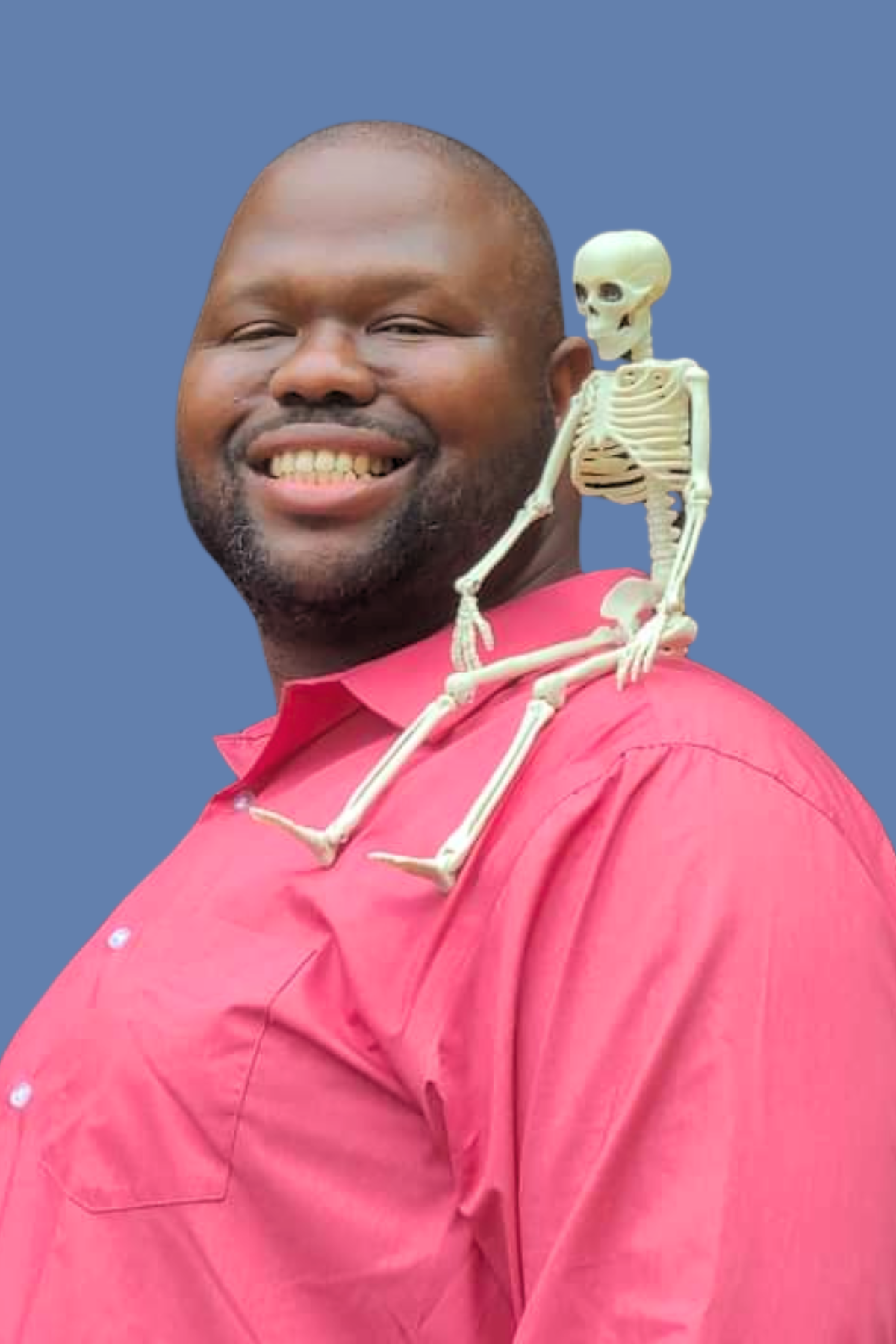
Guest: Waddell Hamer
All right. So I want to make sure that before we wrap this month up, that we have an opportunity to go back and bring in a part of the conversation that you and I had had after we stopped recording the second week. So you had said something that I was just like, yes, that sits with me and that aligns with so many of the people that we are serving through TLC, and also aligns with the topic of this last week of the month. Right. Overcoming those challenges. We talked about what compassionate care is. We talked about sometimes the systems are around us in such a way that it doesn’t feel like we can maybe extend that compassionate care. Then we talked about, so how do we take care of ourselves in the midst of trying to do the work and do right by people around us, while we’re also trying to do right by ourselves?
So we’re going to wrap this month up with how do we then try to overcome some of those challenges that are just naturally present when we’re trying to provide compassionate care through whatever human services that we are providing. So I want to let you kick it off and kind of pick it up from where we left off in week two.
Okay. I said something to basically what I was pointing out is understanding exactly what we’re fighting and what we’re up against. Having a full understanding. One of the things I said when we cut off recording was like, you’re not going to fix schools unless you fix communities. In America, we fund our schools based on property taxes. Ergo, if you have a school in a community that has low property taxes, low property value, and you don’t have as much money feeding into the school system, you’re going to have a school system that suffers.
So, either you change that system, find different ways to fund it, or publicly fund it. I’m not talking about charter schools or whatever, because, again, that’s a whole other animal.
Several systems
Right, right. Either you change that, or you fix the communities the schools are in. There’s no other way to do it. Again, that points back to that 3d level of chess. I want to say that a term that is often used is intersectionality.
Thank you.
Intersectionality. I want to say Kimberly Crenshaw was the woman that coined the term. They all intersect. They all intersect. And you’re not going to be able to deal with one without the other. Another way to think about it is imagine if you got a burrito bowl, right? And you put your rice, your beans, your meat, your sour cream, your lettuce cheese, salsa, you mix it all up or whatever. And then trying to fix a system is like trying to pull that one bean out or that one piece of lettuce out, which is going to be affected by whatever it’s just been mixed with, period.
Gosh. What you’re saying is reminding me of two different conversations that I’ve had in the last week. One of them was with what I would refer to as a hard scientist, not the soft sciences, over here in the humanities. And they were trying to conceptualize humans the same way that they would conceptualize engineering. And it’s going, yes, there are certain things that could be considered shared human experiences or expected developmental milestones or those kinds of things, but no two people are the same.
Even looking at twin studies, it doesn’t matter how closely aligned your genetics, your life, your whatever you can align, you are still different humans. And that aligns with another conversation I was having with someone. They were trying to make sense of some commentary that they were seeing on social media, and they were like, Heather, what does this mean? What are they referring to? What is this all about? And I said, when you cut out all the noise and all of the opinions and everybody’s pushing in all the directions and you pull it back to what it really is, it’s simply saying that you may have a different experience than I do, and because you have a different experience than me, we may see the world differently.
We may have different experiences than each other. And it doesn’t mean that your experience is right or wrong. It doesn’t mean that my experience is right or wrong. It simply just means that it’s different. And it might be contingent on some aspect of who we are, where we live, what we look like, whatever that is. And that’s what you’re referring to with intersectionality, right? Like no two people, no matter how many things may be similar, there are going to be differences, and then therefore, it’s just different.
Right. You can look at no two people, no two systems, even within the school system, no two schools. Just because you’re part of the district, it doesn’t matter. Part of fixing these systems and fighting these systems is recognizing the intersectionality of it all.
Yes.
Recognizing that one’s going to affect another. We’re talking about systems, let alone if you break it down to a kid who, hey, why is this kid at the highest school? Well, guess what? This kid may have been abused at home, or this kid may have used candles all night to see and do homework, and they’re tired, or so on and so forth. You can’t separate and say, Oh, I’m just going to fix this one thing, and that’s all I care about.
And once I fix this one thing, everything is going to be great. Yeah, good luck on that one.
Right? Yeah. And that’s where I think people like you and me, we can like, well, when we rule the world, right? And we have these big dreams, and if I could, or I wish it was this way, or wouldn’t it be better if, right? We have these thinkings, but the reality is the systems exist. People exist. People are in the system, people are being served by the system. And like we had said, I think week two, the system is also made up of people.
So you have all of these different views, all these different experiences, some wielding some levels of power and others wielding less, just by nature of that is how a system works. But then, how do we, in the midst of all of that, overcome some of those, I would say, like maybe collateral damage? How do we either mitigate getting in the way of maybe some of that potential damage? And I think that’s where we see a lot of people in human services taking on more than what maybe their role is defined to do, or even themselves as a person can really take on, but they are extending themselves into areas or in ways such that they can either shield a recipient of something coming through the system or kind of extend maybe something that could offset it in a way which I think is where that true, genuine, are we caring for ourselves? Conversation is a fit there, but the reality is, how do we integrate all of these things? How do we honor the fact that, yes, there are reasons that systems exist, but yes, there is also harm that is being done, and yes, there are people that are in there trying to do right by people, and then simply there’s still scenarios that are not good, that are happening as well.
I know for me, we’ve touched on the chess analogy a few times. The older I’ve gotten, the more I recognize. I’ve come to recognize what I’m good at and what I’m not good at. Even that is a very black and white way of thinking about it. But what I’m good at, what I’m sort of good at, what I’m interested in, what I’m not interested in, we always try to talk about in social work, don’t act like you’re the savior.
Do not be the savior. You are not the savior. You are not the one. Oh, you’re going to come in with this one word or this one idea. That’s just going to change. That’s not how it works. So the older I’ve gotten, the more I recognize what I’m good at. I recognize what I’m not good at, right? Sometimes I’m the pawn in this situation. Sometimes I’m the rook or the knight or the bishop or whatever. Sometimes I might be the queen.
Recognizing what I’m good at and what I’m not good at. What can I do? But also in recognizing what you’re good at and what you’re not good at, not being afraid to say, hey, I’m good at this, you’re good at that. Let’s collab. Let’s talk. Okay. I know I can do this, this, and this. I just worked on… I want to say early January, I worked on an event. I don’t know if I told you this, but I worked on an event, part of a grant, here in town. It was called hip hop insurrection, actually.
It was a local hip-hop artist or whatever, and I worked with her team. And I just remember several times in that conversation working to put that show together. It’s like, this is what I can do.
Yeah.
This is what I’m good at. You’re better at this. You’re better at this, this, and this. I am not good at that. Or not being afraid to be like, you take the lead on this. You ain’t always got to be the one that’s coming in there doing this. This is your thing. You take the lead. I’m going to help you. I’m going to assist you, and I’m going to be the role player on this one.
Well, I want to call out two things that you’re talking about here. One, I think you were initially sharing a kind of self-reflection piece that I need to be aware of myself. I need to know where my strengths are. I need to know, kind of, where my zone is. That is my sweet spot, what I just rock at. And then I need to know where I’m learning and I’m growing, and I’m maybe not completely there, but I’m still figuring it out, and then I need to know where I’m not.
And I think you were talking about, I’ve gotten older. I know more about where that is for me, right? So I think there is an aspect of this that is self-reflection. We talked about that a little bit last week of just, like, how do we notice when we’re burnt out, and how do we walk that? But that self-reflection then can be, and in really functional teams, that can then turn around and foster and kind of situate some really cool collaboration amongst a whole bunch of people, right? And I think, quite honestly, that’s part of the story of TLC, too, is that I started getting pulled into conversations, and people were looking to me to meet certain needs.
And I kind of started recognizing, I can get you so far, and it might be like a few steps beyond where you’re at right now, but if you want to go a whole lot further than that, I’m really not your person. I haven’t walked that, I haven’t lived that, I can’t talk that, I don’t know that intimately enough that it’s really going to speak to your needs. And so for me, I started making connections and going, gosh, this is something that keeps coming up. Like, it’s either an area, a topic, a certain role within the system, right? Then there’s certain needs that are then starting to pop up more and more. And I’m going, man, I just need someone who can meet that need better than me.
And that came from going like, yeah, I hear the question, and I can get you a little further than where you’re at. And if that’s good, cool, let it be good. But then, if you want more, gosh, I need someone to pass you to. Yeah, I need someone to be able to go, “Cool, yes, I got this”, step in and take them where they want to go, but that being further than where I can get them to go, right? But that’s, in my opinion, the beauty of teaming, the beauty of actual collaboration.
But I don’t think that that’s really possible unless you have a good self-reflection, like each of us individually can acknowledge. Here’s my sweet spot. Here’s where I can flex a little bit, and here’s where I really just need to draw the line and then know, okay, cool. In that overlap, we’re not butting heads, we’re collaborating.
We’re collaborating.
And then, whereas outside, I’m going to pass it off. No failure on mine. And doesn’t mean you’re better. It just means that we’re different and that we’re situated differently, so that we can offer different things. So, I mean, in the consultancy, sure, it might look like different formal roles or whatever, but even just, like, who has a seat at what table? I’ve done things where I’m equipping someone else who may not have the competencies that I have.
It’s really needed in that moment, but I don’t have a seat at that table, and they do. So, how can I equip them to then be able to do right by whatever is in front of them, given that kind of positionality that they have in that moment? But that’s, I think, also maybe a bit of a humble perspective, too. Like, I don’t need to say, well, you shouldn’t be at that table. I want to be at that table. It’s like, cool, take it, run with it. And then you just hope that either things shift and maybe you are invited to the table. Or sometimes it’s been like, I’m glad you’re at that table because I don’t want to be at that table, but I can help you out behind the scenes.
Right.
But, yeah, I think you’re talking about that self-reflection piece starting there and then being able to do that self-reflection collaboratively and leverage people in our own networks to be able to expand and extend far beyond what I, as one person, would ever be able to do.
And that’s what you need systems to do. That’s what you need. People within the systems. People within. The question is, how do you overcome all these things or whatever? You have to be humble. Look, there’s 8 billion people on this planet. If we were all the same, that would be a very boring planet.
Yeah.
Thank God we’re not all the same.
Here’s to say, conflict keeps things interesting.
Right, exactly. So, as systems take a step back, you, as the leader of TLC, you know what TLC does well, and you know what TLC doesn’t do well. You know what you have within the agency, you know what you don’t have within the agency. So if you went into, like, for example, if you went to a board meeting of business executives or whatever, and never looking at, I don’t know if we’re looking at an accounting agency or whatever.
You’re not an accountant. You don’t have any accountants on staff, but you’ve done consulting. If you go in there and be like, hey, you got to do this, right? They got to look at you like, yeah, you have no experience in accounting. You’re not an accountant. Why did we hire you again?
Right, but I think that’s so real in schools, too. To walk into a classroom and be like, yeah, no, I was a teacher. Yeah. I worked with this population. I did the things that I’m bringing to you, right? And to say that is not just some outside person dreaming up some big ideas to shove more expectations on people that are already doing way too much to begin with, right? But it’s different when you actually have that conversation with someone who, in some way, gets it, whatever it is.
I think, if I might be so bold, within the consultancy, I think that’s one of the strengths that we’ve been able to leverage with our district partners, is that more often than not, our district partners tell us “I feel seen”, that we’re engaging in conversations in ways that I guess hasn’t been a common experience for them. But I think part of that is because we pass it, right? You and I have done that, where I’m like, hey, I got a situation, I got a team. I got something that I’m trying to figure out. Tell me what I’m not seeing.
What am I missing here? Put a different hat on and look at the same thing, and point this out for me. And that is intentional. It’s by design. And that’s, I guess, different. But then our district partners they see that it’s not “I have the answers, or I am, whatever. It’s “We hope that we can do something better for you to make your life a little easier as you’re trying to figure out what you’re trying to figure out.”
It’s called mutual; another word for it is mutual aid.
Can you talk more about that?
It’s a phrase used in social work.
Yeah.
You don’t go into a community, I hate to say, you on the stage kind of approach the thing. Mutual aid is okay, we’re going to work as a team. We’re going to collaborate. You’re good at this, you’re good at this, you’re good at this. What are we bringing to the table? Every piece that’s brought to the table, you think about what you call it, the Civil Rights movement, right? Prime example. Everyone pays attention to the marches and the protests and stuff like that.
But no one ever thinks about the fact that there is a woman or a man that opened up their house for people to stay in when they came in town to protest, or there was someone making meals, like, okay, so if you got this many people that out protesting, they’re going to be hungry afterwards. So I’m not the marcher, I’m not the one that’s out there on the forefront, but come on back to the house. I got a meal for you.
Come on back to the house, and you can stay there. Or I may not again be willing to sit at the table and have dogs and hounds and stuff bite me or whatever. But guess what? I know first aid. So if something happens, if a dog bites you, come back to the house, I can fix it up, right?
Yeah.
All those pieces are just as important as the person that’s marching.
I like that. I’m thinking of a moment where my husband and I had supported a family who was going through a hard time. When they had walked through that, they said, Hey, we want to host you. Come over. Let’s have dinner together. And they knew that it was definitely more than me and him. There were lots of people that supported this family in all kinds of different ways. And they said, Invite all of them.
Let’s have a big hangout. Invite everyone just so I can say thanks for helping. And I just remember standing with that person, and they were going, “Heather, I don’t know any of these people.” And they had no clue that they knew support had been provided, but they didn’t know where it came from. And then to actually see the faces, they’re like, I don’t know that I’ve ever even met this person. I don’t know.
But it’s just that ripple effect of it can be bigger. And the analogy that someone had told me, and I’m wondering if it’s a fit for the concept of mutual aid, is that if it’s in a social work setting or kind of like walking in life together. We’re each climbing our own mountains, but we’re in a mountain range. And so I’m climbing up my mountain, and you’re climbing up your mountain, and I can see your mountain like, I can see from my vantage point your side in things you can’t see.
And then you can also see on your mountain, over on my mountain, things that I can’t see, right. Because I’m too close to my mountain, you’re too close to your mountain. We’re both trying to climb it, but there is that mutual aspect of like, then please tell me what I can’t see. If I’m about to do something that’s not good, please help me out, and likewise, do the same, right? That it’s a mutual experience.
Like, sure, I might be helping you, but simultaneously you’re helping me as well, right?
No, that’s exactly what it is. That’s exactly what it is. It’s more of a collaboration. As we work on these systems or whatever. As we work on trying to fix these things or whatever, we have to collaborate with each other. We have to, like you said, look at the other mountain and be like, hey, oh, yeah, there’s a ravine coming up. You might want to step around that. Or, oh, yeah, the rocks are a little loose. You might want to find another.
We have to do that. There’s no other way. We’re talking about systems that have been ingrained, and it didn’t get this way overnight.
It’s not going to change overnight either.
It’s not going to change overnight either. Also in that same vein, it didn’t get this way because of one person. It got this way because of many people. And there may be some things that are really good about it. Okay, let’s figure that out. Let’s see what’s good about it. Right? Let’s keep that. There may be some things that we need to change. All right, let’s figure out how we could change it. But also we figure out how we could change it. You got to figure out how did it get the way it got.
How did it get to this? I mentioned a while ago about my school collapsing. It didn’t get that way. That was like decades of neglect and decades of problems to get to a place where entire half of the building collapsed. Let’s figure out how they get that way. How do they get that way? And let’s collaborate and work together to figure out, hey, let’s change some stuff.
Well, and I think that’s such a fit, right? All month we’ve been talking about compassionate care, what that looks like, how that shows up, and how frustrating it can be to demonstrate compassionate care in systems that just does not feel like it’s demonstrating compassionate care to us. But I love that we’re kind of just landing this month on, ”yeah, that’s real”. And it’s something that we wish was different.
And we continually say, you’re only one person, you can only do what one person can do. And that we can care for ourselves in the midst of caring for others. But at the same time, if we can care for ourselves compassionately, we can turn around, care for others compassionately, we can do so in a way that is collaborative. There’s a lot of strength and power in that. And then if that can, then become a consistent thing that is sustainable, right? Not “we’re just all overreaching constantly, everywhere to try to cover on behalf of.”
But if we can actually collaboratively own our spaces and then equip and empower others to own their spaces gradually, right, the long game, gradually, these systems can shift. And as someone who’s had the opportunity to work in some pretty rigid systems that have been established for a while, I’ve actually been able to see some shift. But it is long-term shift, it’s not tomorrow’s shift. And so it’s how do we work in what we’ve got now, but also do it in such a way that together across everyone in all of our roles and all of our own little corners, that we are all actually moving in a very similar direction and we’re simply relying on each other to do that.
And I think that is such a beautiful picture of compassionate care to just land this month on that. It’s all the little bits and pieces, but when you put it all together like that, I mean, come on.
Yeah, no, absolutely. And hopefully, little by little, we’ll be able to. Not little by little, but of course it’s going to take time or whatever to get people, to get systems, to get institutions, whatever, to recognize that. I know we’re in a very divided climate right now in our country, and the idea of collaboration is almost like a four-letter word in some circles, whatever. But you’re not going to get to where you need to be without that collaboration, trying to do it by yourself, you’re wasting your time.
Well said. All right, well, thanks for having these conversations with me this month. This has been a lot of fun.
This has been great. I appreciate it. I love the work that you’re doing, the work that we’re going to do. Let’s keep it up.
Yeah, for real.
I always joke around. I don’t plan on dying anytime soon. So we got time.
We got some stuff to do.
Yeah, we got some stuff to do. So let’s go for it.
Well, I’m excited. Let’s see where it takes us.
Absolutely all.
Thank you.
Thank you. Thank you for having me.