
Ask Me Anything
TLC Begins
Episode Description
Key Points and Takeaways
-
Surrounding yourself with the right people can help you take leaps you didn’t think you were ready for.
-
You don’t need to know everything to start something meaningful, you just need to know enough to take the next step.
-
The values you lead with will shape the way your team grows and shows up for others.
-
Sometimes growth happens faster than you expect, and it’s okay to build systems as you go.
-
Creating lasting impact means thinking beyond quick fixes and focusing on long-term sustainability.
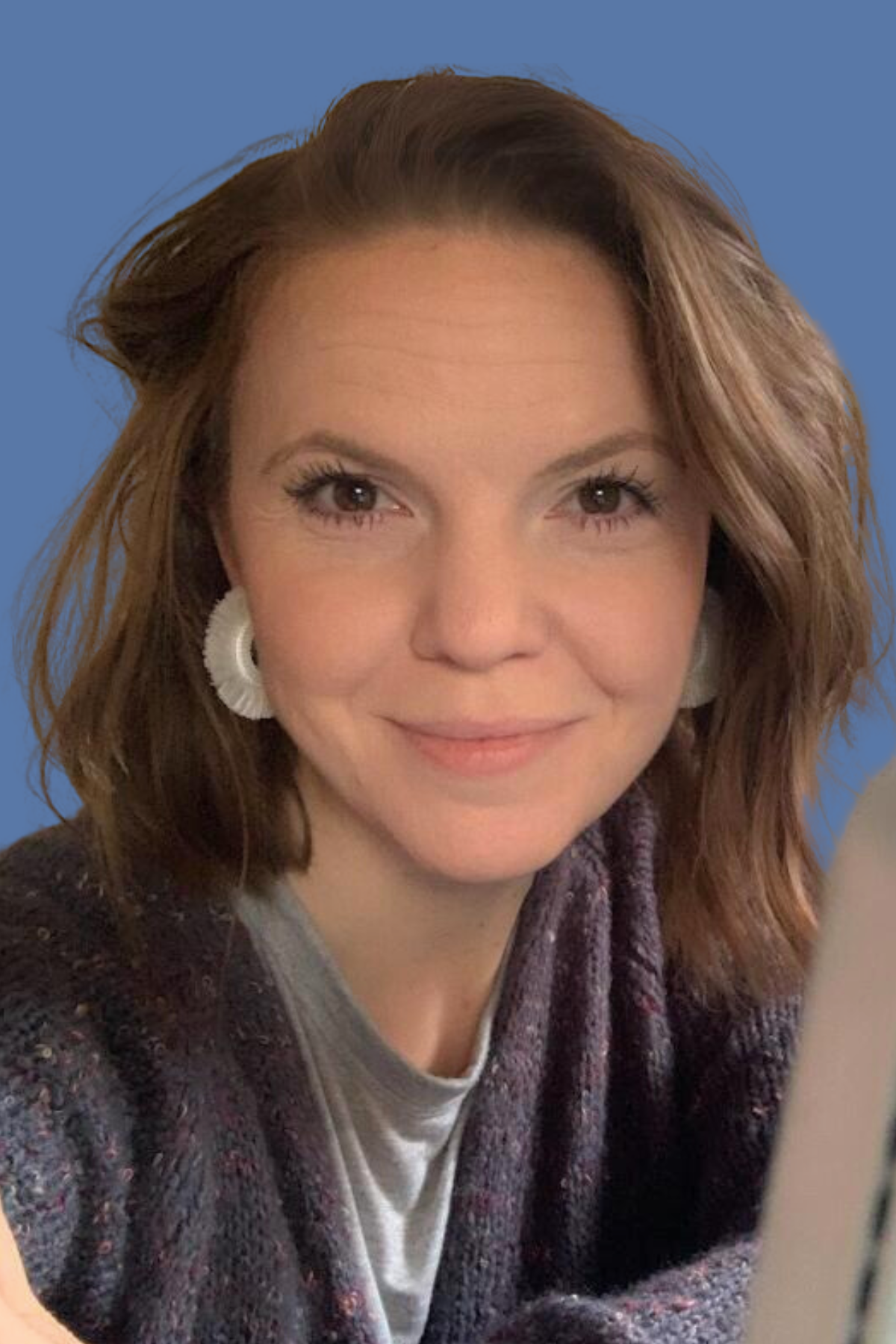
Heather Volchko, BCBA
Hosts: Flora Yao and Matthew Hayes
Guest: Heather Volchko
Flora: Hello, and welcome to Little Bits of TLC. This is the first of many excellent episodes of our summer miniseries, Ask Me Anything, where we will be interviewing TLC's founder. I'm so excited. I'm your host, Flora Yao. I am the LLC's executive assistant and secretary for the nonprofit. I've known Heather for 10-plus years, and I was also one of TLC's very first employees.
Joining me for some of the episodes this summer I have two amazing co-hosts! One is Cass O' Hara, who is currently a BCBA trainee, a teacher with one of our nonprofit district partners, and she's partnering with the nonprofit for some dreaming for the next school year. She is new to the team, so she brings a very interesting perspective.
We will also have Matthew Hayes, who started as a coach with TLC and is now one of the founding directors of the nonprofit.
And I can't think of anybody better to talk to today about the history of TLC and how this all came together than our founder, Heather Volchko.
Hey there. Yeah, so I am a special educator, behavior analyst, program evaluator, and, yeah, the founder of this crazy thing we call TLC. Honestly, I'm just excited to invite everyone along for the ride this summer. These are conversations that we don't tend to have very publicly, but I get asked about all the time, so it's really… Yeah, I'm curious to see where these conversations go with a genuine AMA. And let's see kind of where this season takes us.
Flora: Matthew and I are very excited to talk to you today. So we're going to start off with: what kind of things led you to even starting to think about starting this company?
Yeah. I'll be honest and say most of my career, many of the steps that I have taken have come from other people seeing things in me and being like, “Hey, have you thought about-?” Or, “Hey, I think you could possibly-” Or, “you know, you have these skills. You could do this if you wanted to.” Right? And I will tell you, for about four years before I actually launched TLC, I got to work with Dr. Richard Van Acker.
And in my first year with him, he started kind of planting those seeds of, like, “You know, you're doing the same thing here that I'm doing all over the place, right? Like, you can do these things.” And I was like, “Yep, that's nice. You don't know me yet.” Right? Like, “you can sit on that idea and let's work together and let's see if you still think those things.” And the longer we work together, the more he kind of doubled down on that.
But it- uh, we worked together before COVID, through COVID, and out the other side of COVID in terms of that return-to-learn and like pre/post lockdown era. And it was in COVID where he really doubled down and was just like, “Hey, can I connect you with these people? They're trying to make sense of these things. And I'm seeing what you're doing here, and I think you've really got something to offer.”
Coming out the other side of COVID, I was like, “Okay,” you know, “Our team did great, our students showed up, we had some of the best data.” Like, we were just really, really rocking. And I kind of went to my director at the time and said, “Okay, here's what's next. Here's where we can go next year.” And I was met with kind of just, “But we're good. Look at all the things that you've made happen. Our program is so much better than where we started.”
And for me, I was kind of like, “Then I think I'm good here.” And that's when I went back to Rick and said, “Okay, you've taken the time to convince me. I am willing to take this jump. What does this mean? What does this look like?” And so he then started kind of walking me in this direction to see where it would go. But it truly started as he's, we joke, been retiring to retire for like the 16th time or something like that.
But he never had someone to hand it off to. And if you know him and you've had a chance to work with him, you know he holds his people so tightly, and to know that there's these needs, there's these students, there's these things, right? But if I don't serve them, then who? Who's going to step in? And so he did. He continued consulting for decades just because he didn't feel like he had someone to hand it to. And so I take that very, very seriously.
But yeah, he did. He took four years to convince me that this is something that I could do. And now, even now, he's still tucked behind the scenes and advising our board, and lets me keep him as a phone friend when the next WTF moment pops up. And yeah, that's- It was kind of just the launch of saying, “Okay, I can walk in your shoes here and let you retire as long as you let me keep bugging you and make sure I know what I'm doing.”
Matthew: Yeah, I think that's really good. I would love to even zoom back a little bit further, if you're open to it.
Yeah.
Heather Volchko
Matthew Hayes: And because I know a little bit about your career, right? We go back a couple years, and everything has not been pretty and well-rounded edges, right? And it's been a lot of different exposure to a lot of different industries and spaces and all of that kind of stuff that I think has been really valuable in terms of giving you this perspective where you don't just see the work, you see the people.
So I'm curious, I would love to hear some more about your background that kind of led to how you even see things the way you do, which is why you built the way that you build.
Actually, before we jump too much into the process and strategy, where did TLC even come from? Like, I'd love to hear some of the story of the name and how you even kind of picked that out. Was there any cool conversations or things that happened that, you know, or even maybe just stories of your experiences in the classrooms or with some of our district partners that led to you coming up with this thought?
Yeah, I think the name is actually kind of a funny story because it did not start as TLC. And the stopping point was actually, I guess, there were other companies or something that had something similar. And so we had filed initially, and the name was taken or close enough to taken that they wouldn't honor it for us. So it actually started as Open Door Consulting. And for me, that came from, I constantly say like “leave open doors” or "open the doors”. Like, “only choose to close the door if you don't want to be able to reopen that door”.
And I would say, “Leave open doors, right?” Like “leave well”. And so for me, Open Door Consulting was a way of saying, you know, I can support other people in opening doors. And that could be our students, our staff, right? Like, opening up opportunities that they may not at the moment see, or they may not know how to open said door, they can't find the door in the first place, right? Like, there's a lot of symbolism and imagery that really sat with me in how I saw myself partnering with a variety of people.
But, yeah, so someone else had a name similar or close enough, and we got cut out. So it was actually another person in our- in our- kind of like, behind the scenes helping me sort of dream up this next career path for me that I was like, well, what the heck do I call this thing now? Right? I like the idea of this. How do I retain that? And different people were kind of tossing around ideas, and someone brought up the word “threshold”.
And I really liked that because it was still the same idea of, if you're opening the door, there’s thresholds in a door. And so you actually have to kind of step past that threshold. And then when you look up the word “threshold”, it's that magnitude or intensity of something that would then perpetuate change. There is that kind of tipping point aspect to a threshold.
And quite honestly, I find myself using that word in conversation on the regular. And so it just sort of worked. Like, what's the threshold that needs to be met for this to happen? Or, like, what's our capacity? What's our threshold here? Right? It just sort of naturally fit. And then, of course, with learning that, I mean, we're doing education consulting. That was just a fit, easily. We'd already had “consulting”, “consultancy", something like that.
And for me, it may sound simplistic, but a lot of the consulting work that I had been doing up until that point, I just found myself saying, “Just be nice”. Like, I'm using a lot of really big fancy words to simply just say, “would you just be nice?” Right? And if that was students to students, students to staff, staff to student to staff, it didn't much matter. It was just the underlying sentiment of like, can we just be nice?
And so TLC fit so well because it's still that open door, that threshold of magnitude or intensity, and with the over, like, in the name TLC. And honestly, part of that is also then where some of our company values come from and how we show up and all that. But, yeah, the name started “Open Door Consulting” and then, sort of through conversations, is where “Threshold Learning” came out of.
Matthew Hayes: You know, on the note of thresholds, I'm curious, kind of in the starting process of the business, right? What were some of those initial thresholds that you had to walk over, like getting the business off the ground and starting the process of putting this all together?
Yeah, I think on one hand, forming a business, because I had never done that before, it's daunting and scary, and there's so many different pieces and so many places, and you're working with people that do this every day, and yet you have no clue what you're doing. And so it's just constantly feeling like you're always behind and you don't know what you're doing. You don't know if you're doing it right.
But at the same time, people do this all the time. And so it was this weird space for me to be in, being like, I'm doing something that I don't know. I'm surrounded by people who are like, “That's just whatever, it's another day.” And there's so many details that I don't even know what I don't know. And I just really had to rest on the fact of “but people start companies all the time.” Right? And so for me, from the beginning, I made some very clear decisions to try to surround myself with people who did know corners of business or finance, or anything like that, that could be a phone-a-friend or could help look over my shoulder in ways that I didn't know. Because there's a lot of things I didn't know, and they weren't running in my circle. So I intentionally brought those people into my space to make sure that there weren't any oopses along the way that I didn't intend.
Matthew Hayes: You hit on one of the things I was actually going to ask you, because I know that, like, and I know we'll talk about entrepreneurship and business and kind of get more into those weeds later on in the series. But when you're taking that initial leap, when you're taking that first step across the threshold, there is this big moment of facing the fear, right? It’s like, “oh, snap. Is this real? Like, am I really about to do this?” We've had some of those conversations behind the scenes.
So you kind of started to touch on it, but I was going to ask you, was there anything now, looking back, that you didn't expect or didn't coming as you were getting things off the ground, or did you know what you were getting into, or did that just naturally start to unfold?
I-...hmmm, all? Like everything you just said. I think it's- I think business, entrepreneurialism, the philanthropic sector, all of it is just… You're constantly learning as you're doing, and you can never learn everything, so you just need to keep walking. Like, keep doing the thing and you'll figure it out as you go, as long as you're surrounding yourself with the right people, the right community, and you're able to make sense of it.
But I mean, like, for me, fear factor for sure was turning in my resignation and walking into entrepreneurialism, right? Never in my life, right? Like, I know how to apply for an educator job and work in schools and all that. I can do that, no problem. But to turn in a resignation and not because I had already been interviewing and landed another job, right? Like, that was like, “oh, okay, this is real.”
And that was kind of the first, “Oh, okay, we're doing this thing.” You know? And then I think it was right before I met you, was I walked out of the district that I was serving one day and walked into how I met you the next day, which was just a very surreal shift of like, “okay, next step into the next thing.” You know?
I don't think- The more that I've kind of walked into the entrepreneurial space, it's very similar to kind of like my academic journey is going, like, you don't know everything, and you're not meant to know everything. You just need to know what you need to know now. You need to do right by that, and then by doing right by that, you'll know it, and then you'll start noticing what you don't know next, and then that becomes the next pursuit.
And so I think it's just choosing to get okay with not knowing everything, but knowing that I know what I need to know when I need to know it. And I have people around me that can cover my blind spots and point out to me what's next, and I can keep learning and moving in that direction, but at no point in time do I actually need to be all things to all people. I just need to have the right community that can step in and make the right things happen.
matthew hayes
Flora: Now, Heather, I already know the answer to this, but I'm going to ask you anyway.
Okay!
Flora: When you first started this, did you have any idea that it would turn into what it is right now?
Oh, heck no! There is no freaking way! Yeah, I mean, I walked into consulting thinking about as far as my own nose. Like, I'll just go help people, right? I was working in a district who had kind of decided, “we're good.” And I was like, I'm not built to just sustain, right? I'm built to develop and encourage, and grow other folks that are trying to do the same thing.
What I, Flora, gosh, I think it was three months in, and then we're already bringing other people in. Another month down, we brought another person in. Two months more, like, we get to the end of our first semester, and I think we had doubled our company two or three times? Like, insanity. And then coming into, in essence, our first school year, we brought in a whole layer of folks that just- Again, it's so important to me to be able to have folks that have walked it, consult it. That we are not people of theory. And I found myself having conversations where I'm like, I am going to end up tapping out. I'm further than where they are right now, and I'm good for now, but there's going to be a time if we keep working together that I'm gonna need someone who can walk further than what I'm walking with them, and I can tap out, and they can tap in.
And that was part of the team. I mean, Matthew, that's when you jumped in, was the team who came in that summer. I just remember filling the room that first year being like, what?
Flora: Yeah.
What the what? I was not okay that day.
Flora:Yeah. I was gonna say the- You know, the emoji with its head blowing up, like: 🤯.
Yeah.
Flora: The amount of times I've gotten to see you have that reaction to your own company. It's been crazy.
Oh, gosh! It's like, at least monthly. It is a regular occurrence.
Matthew: Yeah. That brings up such a good, like, at least feeling for me, which just kind of grounds me back in some of the initial things that you said, right? Even of, like, others seeing stuff in you that you didn't see in yourself. And I think that that's a mindset that you've continued to apply to other people around you. And kind of the heart of the work, or even when you're talking about working with Dr. Van Acker. And I think that's such a great example of being a student of success.
Right? And not doing things on your own, but finding ways to collaborate and build community.
Flora: So, Heather, we don't just have the LLC, right? For those who don't know.
Yeah, I mean, that's part of the journey, right? Yeah. We had launched an LLC, again just for me, myself, and I, to go help people. And as the team grew and word grew and we ended up with more partnerships, and then seeing the different kinds of needs that they were bringing. And then I think we got to the point where I started recognizing there are barriers in how we are established as now a group and as a company that don't need to be barriers. That there are ways that we can position ourselves as a consultancy to be more accessible to folks.
And that was when we made a complete shift, completely changed our business model, and a lot of our structural pieces too. And we launched a non-profit. And so the goal of the nonprofit is really to continue to provide that direct access of expertise from our district partners to the consultancy. But to do so in a way that they could even access services or supports for free or mostly free.
And by us being a nonprofit, we would then have access to grants, philanthropic organizations, funders, donors, that we can really diversify the ways we are able to bring funding into public schools. It's really important to me because at the exact same time, we were watching a lot of funding leaving schools, and now, I mean, we're launching this in summer 2025, right? We're also watching the exact same thing happen again, where there is more and more funding on its way out. But I keep saying, even though the funding is leaving, the students aren't.
At least not yet, right? So as long as the students are here, we've got to figure out a way to serve them. And so if we can be positioned as like a business entity to be able to access other resources that schools either aren't or aren't able to, or, you know, for whatever reason, we could kind of resource ourselves so that we could resource them. It just made sense because that's how we could show up. That's how we could continue meeting those needs. And we could try to work around some of the barriers that some of our districts or even, like, folks that wanted to be our district partners, and we're having some barriers in getting there.
We could work around it. It was no longer a barrier and would open a lot of doors.
Flora: So wait, so where did supervision come from then?
Oh, gosh, yeah. Good question. Because when we're out working in districts, more and more people are like, “Oh, that's so cool. How do I do that?” Right? And there's this curiosity. Even as a BCBA, as an in-district consultant, people would still ask like, “Oh, if I do my master's, can you help me with my supervision?” And I always was like, “No, that is not built into the hours of my day. I would love to, but I can't.”
And it happened more and more as we were working with more and more districts. I was also running into so many people who'd already completed their master's, but they didn't want to leave the schools, and they didn't see a way to get their hours outside of a clinic or in-home setting. And so for me, I was like, oh, my gosh. We've got all these people with all these skills, and they're literally- The only gap there for them is just getting those hours, and they're already doing it. They're already in those spaces doing those things, serving those people in those ways. They just need someone to be able to see that with them, help them document it, and get them into that exam phase.
And so, yeah, basically enough people kept asking, and I was like, there's gotta be a way to do this. So yeah, we ended up launching it as a collaboration between me and one of the other BCBAs who really loves leaning into training. And I kind of had built out the model for how we could pop up a directory and partner around some of the academic stuff to make sure that they could connect the dots between their practice and what they would need to do on the exam, and someone else was able to step in and really champion that and pop it up. And we've started training, and now we've got university partnerships and all this stuff.
Yeah. Again, more stories of “What?” Now I’m sprinting to keep up with my own company at this point.
Flora: Right? From going on a walk and being like, “Hey, do you want to join me in this thing?” To where we are now is absolutely mind-blowing.
I know you've literally been around since, like, day zero.
Flora: Yeah.
Matthew Hayes: One of the things that I really love about being a part of the TLC team and family is just the adaptability and agility of, like, as things pop up, as things change, as all kind of different competing priorities come up, how we've always been able to not only handle them, but then also seemingly be unintentionally a couple steps ahead. Right?
Which has been really, really cool. But I think a big part of that really hinges on the values of the company, which really kind of go back to the values of the team. So I'd love for you to maybe share for maybe a minute or so on kind of what are those values that kind of drive not just you, but the TLC family and by default, the TLC network.
So as our team kept growing, one of the things that I found myself continuing to go back to as we were rerouting into expanding the team internally to serve that growing need that was coming to us for those supports was like, what did I need to be true within our team to know that they were going to show up the same way that I would show up? And I knew that our team needed to have more than what our partners had, because if not, they should just hire them as internal employees. We really don't bring anything additional to the table.
So I knew that there had to be a marked level of competence from anyone who was going to kind of stand on our side of the partnership. But at the same time, I had also had lots of interactions with folks that had tons of competence, but there was not enough humility that actually made that intellect transfer into practice with the people that they were consulting with. And so for me, it was important to make sure that we had compassion in how we were doing what we were doing. It was not good enough to just know more or have access to more resources, or you know, whatever that way was that we were going to show up in that competence.
We needed to be able to demonstrate that through a compassionate approach in those interactions. Likewise, we couldn't just be really nice. We needed to actually have those skills. But it truly could not be one or the other. And honestly, just through talking around it, as we were growing so quickly through that first year, we really just ended up rooting in that compassionate competence, and that kind of became what we stood on and together into that second year. And now what? Three or four years in at this point with a nonprofit, one of the beautiful things is that you actually get to do overtly mission-driven work. And so, TLC has been very values-focused and mission-driven from the beginning.
But as a nonprofit, you get to actually say those things and really put it out there and stand on it. And so one of the things that I love about how our team was able craft our values as a non-profit with our district services is that they still capture the same sentiment, but you know, in slightly different verbiage, right? We still say that we are anchored by integrity, right? Like we are who we are, we will be that through and through. We live that through our transparency in how we are interacting with people, and we show up as full humans, and that we genuinely believe that we are better together.
That it is not one person, there is no one person that is going to be able to do everything. Education is insane, right? No one can be all things to everyone. And that's true amongst our team as well. We cover each other's blind spots, and we step in to support each other along the way. And it is in partnership that we get to then continue to extend and expand that local capacity of anyone that we get to work with, if that's our districts or their practitioners.
But all of this is really with that focus of creating legacy. That this is bigger than any of us, any work that we do now is not just putting the band-aid on the leak, and whatever system it may be, it’s that what we are doing now is for the purpose of sustainability and really being able to get that to last so much longer. So it's not just the little project meeting the little need. Yes, we do that, but we do those things in a way that sets up that future trajectory to have that legacy not just of like us and our work, but that the local can actually serve their people better, if that's through a district system or through meeting the needs of a practitioner, that that legacy has ripples way bigger than just the little work that we are doing.
Matthew: Okay, well, I love that, Heather, and thank you for sharing so much and so openly, to your point today. One of the things…- I'm here, I'm here taking notes myself, right? Whenever I get a chance to be a small fish in the pond, I soak those moments in. So one of the things you just said, which I absolutely love, is “In partnership, we expand our capacity.” And I think that's so true.
So what I'm super excited about is as we continue partnering through this Ask Me Anything series, we got so much more that we're going to dive into. I know we're going to hear more about your story. I know we're going to talk more about what TLC does in actual tangible topics and tips as well, like who we serve and kind of what needs that we try to meet. And then we're going to talk behind the scenes and kind of get a little bit into the weeds, kind of peel the curtains back from a business owner standpoint of what does a day-to-day look like? Right? Even for the new entrepreneurs or people wanting to get into these kind of spaces, what kind of things should they be paying attention to? And also like what kind of tools, like tangible tips and, and tools are we using to help scale a company of this magnitude in such a fast way.
But there's also some conversations that I think are going to be really, really meaningful. Where maybe we can talk about some of the in-depth stories of the people that we work with and why we're so mission-driven and kind of what that's brought up for us as we've, as individuals, continue to grow along the journey as the company grows. And then I'm really excited as we wrap this series up with kind of a vision casting, looking forward.
Right? As we wrap up this school year, what does next year look like? So thank you today, Heather, for all that you shared and kind of being open and setting the stage for this series because I know it's going to be so, so good.
Flora: Oh, yeah. I'm super duper excited about this, and especially because our next episode, Heather, we're going to be talking about you.
So stick around. Don't go anywhere.
Need something?
-
Threshold Learning
205 N Michigan Ave, Chicago, IL 60601 -
university@thresholdlearning.org
-
support@thresholdlearning.org
Let's be social!
Copyright © 2026