
Ask Me Anything
Real Rest
Episode Description
Key Points and Takeaways
-
Understanding team dynamics and checking in early helps prevent burnout before it starts.
-
Self-care works best when it’s broken into levels: what’s urgent, what’s needed, and what can wait.
-
Work isn’t self-care. Refilling your cup takes more than just loving your job.
-
Strong systems and clear strategies can actually make space for the human stuff, not crowd it out.
-
Professional relationships thrive on give-and-take. Honest communication and flexible timelines make all the difference.
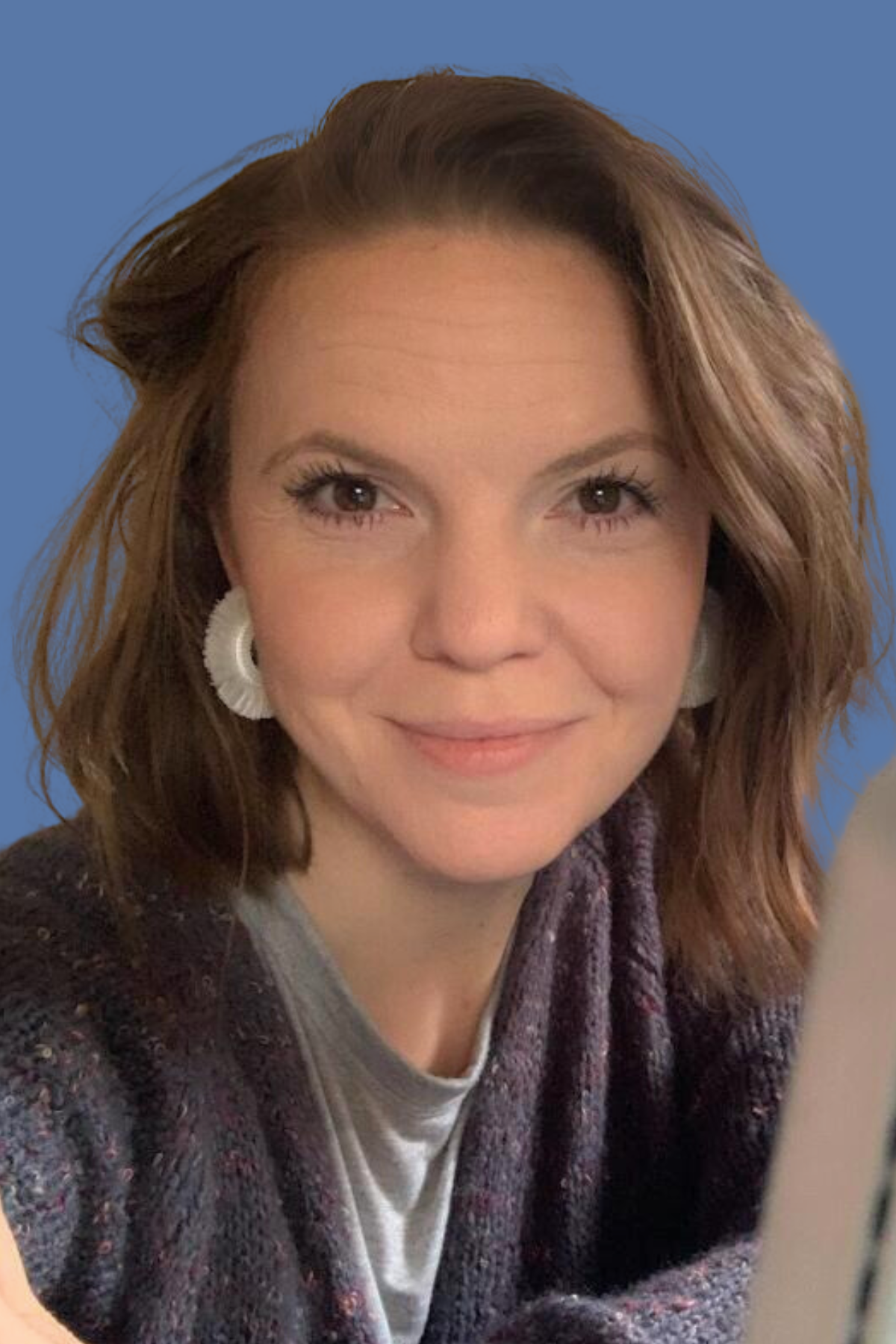
Heather Volchko, BCBA
Hosts: Flora Yao and Cass O'Hara
Guest: Heather Volchko
Flora: All right, so we're back for another episode of our summer series, Ask Me Anything. I'm Flora. I have been with TLC since the beginning, so I know a lot about what's been going on and what is going on. And we have Cass again.
Cass:Hey. I'm Cass o' Hara. I am a current BCBA trainee. I'm also a teacher with one of our nonprofit district partners. And I'm partnering with the nonprofit for some dreaming for next school year.
Flora: Yeah, and I'm really happy to have you here because we are talking about one of Heather's absolute favorite topics.
Sarcasm. Sarcasm.
Cass:Well, we just got done last episode. You and Matthew beautifully laid out what it's like on the business side and what it means to do all of those things. All of the things. Right. But how, and this is the age-old question, how do you care for yourself during all the chaos that is tlc, Emphasis on chaos. Yes, yes. I mean, that's a lot. You, you're kind of running full steam all the time. How the heck do you make sure that there's time for you?
Yeah, I think part of it is just acknowledging that some seasons there isn't, but that there needs to be seasons that are. And so if that's in a week-to-week rhythm or when that is really not possible in a month to month rhythm rhythm, and especially I'm like a, I hold firmly to a year-to-year rhythm, then there's, there's fluidity with it. Right. Like, because I never want, you know, either, you know, things that I'm trying to do to get in the way of my ability to do those things.
But I also don't want to, you know, swing that pendulum so far the other direction that, because I am so like inwardly focused, then I am now actually missing opportunities that are around me as well. So I think for me it's, it's that seasonality of it and knowing what it is that I need in those different seasons that kind of drives me to figure it out. Um, I mean, one of the, one of the trainings that I did with one of our buildings was looking at. We did like an MTSS for ourselves and said, you know, tier one MTSS is what I need on the daily to make sure that I can like show up and function and you know, so I need to make sure that, you know, I actually sleep, you know, and more than the four hour minimum that I actually get some rest because if I don't, then I'm going to show up. Not on my A game, or at least anywhere close to my A game. So, like, what are those things that I just need in, like, a daily rhythm that will just keep me showing up? And then those, you know, tier two things are the things where I'm starting to get a little rocked in, you know, whatever it is that I am trying to do, if that's how I'm showing up at work or showing up in my personal life or, you know, wherever. But those are the things that I need as, like those spot checks.
So, like, there's a specific thing for a specific purpose that's going to, you know, fuel me back in. So for me, I know when I'm getting really stressed or when I've. I've got a lot of, like, emotional, especially anger, when I'm getting, like, really frustrated up against things, I just need to go for a walk, I need to work out. I need to, like, put some motion in my body. Um, and so for me, that's a tier two thing.
Uh, but then tier three, right? Like, those are those crisis moments where, you know, the, the floor, the rug, whatever has been ripped out from underneath you. Um, and this is the, like, full stop, I need help. Um, and so for me, like, there are people in my life that I can then tap on and be like, I am not okay, right? And then they can be like, okay, let, like, let's walk that out, right? Let's see. See what's going on.
And sometimes it's just being able to have that space and that time and that, like, safe, you know, conversation partner that I know that they will know me, not just the moment, but that they can walk that with me. And to have that for me, like, that's a tier three thing. For me I don't need that all day, every day. And quite honestly, it's kind of exhausting to, you know, have that all day. But when it's needed, it needs to be there.
And so for me, I think it's just that seasonality, you know, what is needed at those moments in time? Do I know what continues to push me back in those directions, and can I tap into those and, like, build that in along the way?
Cass:So while you're leading a space that's full of opportunities to scratch your brain in ways that do feel good to you, have you ever found yourself justifying that? Working is self-care?
I, for me, no, like, I absolutely love what I do. And I think you have both. You know, in this entire, like, little summer miniseries, has done a beautiful job at kind of Pulling those things out of just how I see the world and how I show up and why we're doing what we're doing and, you know, how we choose to continue to serve people and get creative and how we can do that. And that's. That is real.
Like, all of that is just, like, that's, that's very real, but it is exhausting, right? Like, and that's also very real. Like, there is a ton of work. And I know with Matthew, we got to talk about, you know, some of just the heaviness that comes with, you know, building and creating and making sure that, you know, between business and operations and, like, there's some good, you know, foundational pieces that position us to be able to do, you know, the work.
But those are really big, heavy, hard conversations. And the work that we also do is really big and heavy and hard. And so I don't see the work as self-care. I see a lot of the work as us caring for people. But whenever we are serving, right, like, we need someone to turn around and serve us. So I don't think I am confused or, you know, I don't put any rosy glasses on by me caring for someone else. They are then turning around and caring for me.
I don't believe in relationships set up that way. Like, there should be no expectation of, well, I did this for you, so you need to do this for me. No, like, I need to have people in my life and I need to have things in my life, you know, activities or whatever, that will do that for me, but it doesn't need to be part of, you know, this dynamic. I do those things so that I can continue to show up and, you know, serve in whatever ways that I'm tapped to do.
Flora:So, you know, something I've. I've noticed that a lot about you is that when any of our team comes to you and is like, you know, I. I can't do this right now. I'm tired or, or something's happened. You are never surprised. Something you say a lot is like, life happens. Life happens to kind of be like, okay, it's okay. So how do you encourage, like, all of us, because we're your team, how do you encourage us to care for ourselves?Heather Volchko
Yeah, that's a great question. I think, Flora, in the conversations that you and I have behind the scenes, you'll be like, Oh, yeah, I reached out to this person in this way, and this is what they said. It's exactly what you said they would say, you know, and I'm like, I know my people. And I think anyone in any position of leadership, and I don't care if that comes with a title or if that just comes with your positionality, you know, who's looking to you for support or, you know, leadership or guidance, is like you. You just need to know your people.
And so for. For me, that's why I will ask questions like, How are you doing? Do you have too much? Do you have too little? How's life? Right. Like, because we are really lucky at TLC to have folks that, you know, have very high capacities, you know, blessings and curses of having high capacities. But sometimes that means that the. The mission or the. The opportunities are so alluring that we can absolutely forget that if we tap ourselves out completely, then the work will not be done.
And so I am very protective around our team to make sure that they truly can show up fully, but not always have to everywhere. And so I think, Flora, you've watched behind the scenes where someone's stepping in to take something and then something happens, because inevitably life happens, right? It's okay. So what was the outcome that we were trying to achieve by that person doing that thing? And how can we continue to make that outcome possible?
But maybe not in the same way. And maybe that's changing how that person is showing up either for that task, project activity, or for that season, or it could be shifting to someone else who's actually got some of those competencies, and maybe they just had some time open up where they can step in in that way. And so again, that focus on, like, what are we trying to do, what are we trying to make happen, that doesn't then put it contingent on this person needs to do that thing.
And yes, at tlc, we are stacked one deep. Like, generally speaking, across the board, we are pretty much stacked one deep. But that goes back to our conversation that we had around. Like, there is just so much depth of meaning in having walked something to have that story so that you can walk someone else through their story. Um, so it is intentionally kind of like stacked one d, because no two people have the exact same story.
So there have been times where it's like, well, really, that is kind of that person. And so sometimes it means me going back and saying, hey, you know what? Something happened. We're not going to be able to hit this timeline. Is this a need that could extend the timeline, and we can continue to meet that need, and in this way, but maybe not on this timeline? But again, I think for me, it's, you know, life happens.
Flora: Right.
If we're here for, you know, the outcome that we're trying to support, then it just goes back into that creativity. And it's not this strict, you know, specific person, specific task, specific timeline. And that there's rigidity in that, which honestly drives some people crazy. Like, some people thrive on timelines, and they just need that rigidity. But I've also then had the opportunity to walk people through, you know, but then you tap yourself out and you're draining yourself. So yes, you can hit that timeline, but then I can't ask you to hit another timeline on the other side of that because now you're exhausted, you gave it everything.
And so being able to walk that.
Flora: Right. I do know that when there are big life events for certain people, you're very good at checking in with them and seeing how they're doing and making sure they take care of themselves. And I feel like, as someone who's, you know, overseeing all of us, that that's a really good way of modeling self-care for them by checking in and just being like, it's okay that you need this time. Are you okay? What do you need? Can we help you with anything?
And that just encourages all of us to take care of ourselves and not be like, oh my gosh, my manager's gonna be mad at me. You know, like, I've had that at jobs before, and it's not fun. So thank you, Heather, for doing that first of all. But yeah, it's, it's, it's pretty amazing.
Cass: So, as you create an environment that's like that. Right. While their boundaries are important, where's the line as far as grace being given to people who maybe are needing it or need to spend a little bit more time leading, leaning into their self-care? Um, you know, I hear you saying, and maybe that's all your experience has been. I have a feeling it's not been that way, where like everyone will come to you and say, hey, I'm not doing well, you know, where is the line for you where it's like, hey, I see you trying, but it's like you're just not making the cut.
Do you have to have those conversations? How do you do that while like putting an emphasis on that self-care and that compassion that you naturally carry?
Yeah. So I think if I'm hearing your question correctly, it's basically where, where does the humanness butt up against the operations?
Cass: Yeah.
And that's a conversation that I've had with a lot of people, especially like some of the Conversations Matthew and I had in earlier episodes around the entrepreneurial space. Some of that is really cutthroat. Just some of, you know, the startup culture and needing to, like, get fast traction and see, you know, high profitability and progress and all of that. And a lot of times it is viewed as like the antithesis of self-care. Like, because you are grinding to hit this big target, fast outcome, whatever. You know, self-care is when you arrive, and then you can pause, breathe, and take care of yourself. And then in that community, you turn around, you start up another thing which is not my jam.
But that to me, I don't see it as that diametrically opposed. Where I see it is because of the humanness we need to be locked in, in our operations. So for us internally, that looks like having good workflows, knowing what pieces fall on who. So if you were to actually look behind the scenes and some of the stuff that Matthew and I are talking about, like, how do we even, you know, have systems in place that can work with so many different people in different states in different time zones, supporting different needs in different districts. All the things, right? Like, how do you do that in a way that doesn't feel like you're reinventing the wheel every time you do anything?
But that makes it really easy to then say, okay, if this person cannot hit in this way, then what adjustments impact those operations? And then, you know, to shift that out from there or to then have a very clear, hey, so and so, can you step in for so and so? Because it is, you know, clear where they kind of fit in, in that bigger picture. But I think that comes down to just knowing, you know, how long is this season?
Is this this week thing, or is it a this month thing? Is it a this-semester thing? Is it a this-year thing? We've had folks kind of pause and pull back for a year and then be like, okay, my life's in a different place. Can I re-engage? I'm like, game on, right? But we've seen the same thing with practitioners and districts that we serve, too, right? Like different people have different needs, and likewise, different, you know, operate things they can offer in different seasons. So for me, that's the operations.
Can we have a situation where I know, okay, this person still, you know, has a desire and has skills, but doesn't have the time. And now we're having more needs in that area. It isn't to continue tapping harder on that person. That's now, okay, we need to look at maybe expanding our team because the need is coming up, and they can still engage and they can still lead, but now they can actually lead others that are stepping in to try to learn it or figure it out along the way.
So I have not come up against something where it's, I mean, like, sure, the micro. Right. Like, I'm really sorry you're sick, but the meeting is still in the morning. You know, like there are those moments, but then it's like, so how can I help you? Can I take something off your plate? Can we co-write this? Can we, you know, what do we need to do as a team to get you and collectively us through to meet whatever that is?
But anything other than that, it just becomes an operational question. Like, and that's just looking at team capacity, meeting needs, and trying to, you know, constantly walk that walk of finding like where those two thresholds align on both sides. But I don't think that needs to overlook the humanness. Like, I think that's just part of the decision-making in the operations.
Cass:So as you encourage your team to continue to care for themselves and as an ever-growing person, as we've alluded to in our past episodes, who is always looking for a solution to make things better and to grow your space and the people around you in comparison, how have you seen this affect burnout? Right. So now we're putting more of an emphasis on self-care that maybe we didn't in the past, or we have different ideas or more ideas. Just like you said, you came up with the MTSs for the business itself.Heather Volchko
Yeah. I think that's part of why you're hearing me be so protective around our team is because TLC is an and. Right. Like we're. We're small and mighty, and we are serving as many different things as we can, as creatively as we can, because then we are extending our capacity that is already fairly limited. But we know that we have something to offer in the spaces in which we are able or allowed to offer that.
But if that is tapped, then it's a full stop. And that's burnout. Right. Like, burnout happens in so many different directions. Like, a lot of people will talk about burnout coming from the workplace, but it's not. It's a cumulative life experience, and all of the things that are happening are what ultimately get us to the point where, as a human, we are like, I'm done. I don't even care what you put in front of me. I'm not. Like, I am not functioning.
And that's. That's burnout. It's part work, but it can be part life and part a whole bunch of other things, too; collectively, then that is what creates that burnout experience. So I try really hard to watch that coming down the road. And I. I mean, there are different folks in the consultancy that I have watched actively burn out. And I'm prompting them, asking them, Hey, how are you doing? You doing okay? Like, because I am noticing things that I'm like, they're on the road to burnout.
And honestly, because some of the work that we do is a little bit different from the typical, you know, show up and do your thing type of work. Some of our. Some of our team haven't even noticed that they were burning out, because they were burning out in ways that they never burned out before. But I was noticing just some shifts and some differences, and then they'd be like, yeah, actually, I think I'm burning out. Like, I. I've never done this before. Like, what is this? Right?
And we've been able to engage in those conversations, but because it's a given, it's going to happen. If you are stepping beyond whatever your initial capacity is, which for most people, if you have, you know, whatever your typical demands are in life, and now you're adding something to that, well, you're already stepping beyond that capacity. So I am very protective and very aware of how our people are doing.
But, yeah, I think. I think you're right in the way that you're asking the question. Because you, you really can't have one without the other. Right? Like, if you are not caring for yourself in whatever way that shows up, and, um, then you will burn out in whatever way that shows up. Um, and so I think for me, it's making sure that people can still show up and, like, do their thing and care for people and, like, make sure that their story is able to walk alongside someone else's story as they're trying to figure things out. Right? Like, but we can't do that if we're not able to show up and do those things. And so that's where anything I can do to kind of create, you know, those delays between, you know, where burnout happens, like, is coming and when it happens.
A lot of times those are the questions, Flora, that you're. You're noticing of like, hey, how are you? Are you okay? I'm noticing this is hard. Or, you know, you've got a lot of tasks on your plate right now. I literally just did this with someone last week. I looked at your load, and you actually have accumulated quite a big load. Like, are you okay with all of that? And are those timelines working out for you? And are they things you're still interested in doing? And like, is there anything that I can be doing to alleviate pieces of it that now that you're getting into it, you know, maybe there are things that you're like, actually, yeah, if you couldhave someone to do this piece, I'll do the rest of it. Right. Like, those kinds of conversations are, it's, it is that, I don't know, the protective force around making sure that burnout doesn't happen so that people can still continue to show up. And sure, like, that may be an aspect of self-care, but I think it's just like caring about the humans doing the work.
Yeah.
Flora: Now I know specifically, you and I, Heather, we have had many conversations about boundaries because, you know, a couple of years ago, I didn't even know boundaries existed. So, you know, but like, what do you think as like the owner of tlc, what do you think is a boundary or a couple of boundaries that are really important to model for everyone? Because everyone is watching you, you know. And so what kind of boundaries do you think are really important to model for all of us?
Yeah, I think one that I have struggled with my entire career has been finding the sweet spot between being a human and being a worker, and that they, at times, are very appropriately so separated, and at times they need to be integrated, if that makes sense. And so, like I said, I started in corrections. You do not share personal information. You do. Like, I definitely had moments where I was working with a guy on the unit, and then was in the grocery store and saw the guy, you know, I'm like, oh, you're out.
You know, like, so, like, there's just, you know, very intentional boundaries that need to be in place professionally. And I mean, especially working with students who will throw anything hurtful right back at you in a moment where they also are feeling hurt, you know, like, don't give them more ammo than what you're going to be able to receive when it comes flying back at you. Right. So I have been very, very strong in holding some of those professional boundaries, but I think I've always struggled with how to bridge that into my colleagues.
Right. So I could handle that with my students. I knew where those lines were, and we could be personable, and I would share, like, they knew, you know, that I had certain activities that I enjoyed or, you know, like the kind of the specific vagaries. Right. But they never had, like, details. But then with my colleagues, well, they could have the details, right? But then sometimes it's like, well, then does that colleague need that detail? And then there are all these ulterior motives in some of the systems that I'm working on. And so, just how to navigate that. I've never really been good at that.
And so I think in tlc, that's something that I have tried just very. Like, it has been an intentional effort on my side to show up as a human. Like, I am not afraid to say like, my body is not well, and I'm sorry if I'm a little bit slower on communications right now, or, like, the floor is tapping in this way or that way or this timeline. We're going to try to, you know, slam this out by the end of this quarter.
It's just not a realistic timeline. We're just going to have to push it. And I will communicate that even to people that are waiting on those things with us. So, I don't know, like, communication for me is kind of that, you know, biggie there. But, yeah, I think that's something I've really struggled with in general is just how to hit that sweet spot between being a human and being a worker and knowing that it is a. Both and, and to then give people the space, but to have the operations around the people so that it can really all, like, to the best, you know, extent possible, really all function together.
Cass:Well, I think too, in practice, it's one of those things that's like, if you set. If you create an environment in which I can be a human one, I'm gonna work harder for you. That's, that's what it is like as a worker, that's who I am. And I'm less likely to feel that burnout because I know that there's been a space created where if I even do hint at that burnout or someone senses it in me, there isn't. I'm not going to be reprimanded for that. And I think that that is a common place, unfortunately, in a lot of places. I mean, gosh, almost every place I've been prior, it's been kind of that way, where it's like, no, no, you need to meet the goal that we have set for you, or you're kind of nothing. And that's not, that's not gonna one retain people.
Flora:Right.
Cass:On the business side of things, that's not gonna retain people. But that's also gonna create a lot of turmoil inside and stress inside humans as they are. So, something that they may have been able to push through. Now they can't because they're also facing the fact that no one's going to see them as a human. And so as a leader. Right. You are leading by that example. We learned that in, in behavioral training. Right. Behavioral management strategies, such as modeling, are massive. And so if I expect my students to, let's say, apologize, right.
Then I have to be the kind of person that says, Hey, as an adult, I didn't have all that information, and I'm really sorry that I jumped the gun and I kind of, you know, I made that decision without all the information, so I'm really sorry. Can you forgive me? And creating an environment where I think a lot of people would see that as a weakness, as admitting where your faults are, it also allows other people to say, Oh, wait, humans are fallible, and it is okay to be human.
And I'm gonna do whatever it takes to make sure that I'm continuing that environment and that essence of humanity, and where I'm going to be honest about kind of what I'm struggling with. Because gosh, if my boss can do that, if my boss can do that, then I can do that too. And I think that culture is massive for self-care. And it's one of those things where it's like, oh well, it can exist, or maybe it sometimes doesn't. No, I think it's kind of like self-care care, and the culture of self-care surrounding it is all or nothing. And people are either gonna take liberties with that or they're not.
And the unfortunate part is that I think you see the most success in the happiest people working in spaces where it's okay to be fallible, which kind of sounds like a conundrum in itself, but like it's good, it's good to be a human and to be recognized for that. Especially when you're seeing the person that you look up to, or who is mentoring you, or whatever, doing those exact same things.
Yeah, I mean, I can toss in a quick example here. I agreed to pull together a very big, important, highly confidential report for someone, and it ended up being on an insanely condensed timeline. And so I did. I pulled a couple all all-nighters back to back, crazy weekend, ran all the things, and in the Back of my mind, I was like, if my people could tell me that this is an insane timeline and I can't do this, I would honor it.
Like, why am I not honoring that for myself right now? And so I had a conversation with a colleague, and they were like, Heather, just ask for an extension. Like, just. Just ask for an Adam. Like, it sounds so easy, doesn't it? Right? But like, when you're in it and you're doing it and you're trying to hit it, like, it just doesn't. It's not the first thought that comes to mind. Because I agree. I've been in primarily those workplaces where the timeline supersedes the human.
Cass:Yeah.
And it was just one of those, like. Right, okay. So I did. I asked for an extension, and they were so angry and dealt with it and walked it. And then I hit the, you know, extended deadline, and when I was reviewing everything I had pulled together, they were like, Heather, I am so glad you asked me for this. Existence is so much better than it would have been. And I was like, right. That for me was the aha. Like, this is why I am okay to choose the human over the timeline is because then you just get a product for the sake of a checkbox. Like, it was completed, it was done on time. Woohoo. Right. But like, to what end? Like, what are we actually here for? What are you trying to do? And if what that is cannot be done on that timeline? I'm not saying like, extending, definitely.
Right. But, like, can there be flexibility so that the good work can actually be done well? Like, that's what we're here for. And if a timeline is what it takes to nudge it so that the work can be done well, and it's workable. Right. Like, we're not up against, you know, certain things that just cannot be moved. It just needs to happen. Right. Like, then why not?
Flora:I would love to close out this amazing episode with a fun fact about you, Heather.
Oh, gracious. Yeah.
Flora:Can you tell us what's something you really love doing that really relaxes you?
Hmm. I love being in foreign places. I love being in places that I am not familiar with, that I don't know everything about that you know, may have something, you know, familiar to me. But yeah, I mean, part of that is, you know, before I started my double doc journey of wherever this is headed, I used to live or work abroad almost every year. And so there's just something that I love about being in a space that's unfamiliar and yet still so human and real all at the same time.
So if you want to bridge that back into the topic of self-care. I was just out with a couple of friends the other night, and we stopped at a thrift store bookstore, and I got a book that's what to go, where to go, when, and it's literally just a chapter-by-chapter. Is January, February, right the whole way through the calendar? And it's like, so if you're going to travel in January, here's where you should go. This is, you know, because of the weather or the festivals or the season or, you know, whatever. And so even though I'm in a season where actually going and putting myself into, you know, spaces that are, you know, not as familiar to me, I can still kind of dream and explore. So I can take that book out on my back patio and dream, and then walk back in and keep doing the grind. You know, I'm gonna have to borrow.
Flora: That book from you sometime. All right, so that was amazing. And I think our next episode is really exciting because we have Cass and Matthew, so that's gonna be super fun. All right, so I'll see you guys next time then, huh?
Sounds good. See you then.
Cass: Sounds good. Bye.Need something?
-
Threshold Learning
205 N Michigan Ave, Chicago, IL 60601 -
university@thresholdlearning.org
-
support@thresholdlearning.org
Let's be social!
Copyright © 2026