HIGH-LEVERAGE PRACTICES IN General Education and Resource CLASSROOMS

Set the Tone:
Establish Social Expectations

Episode Description

In this episode, Heather is joined by Waddell, a school social worker who believes social work belongs far beyond the therapy office. Together, they talk about what it really looks like to teach social behaviors in ways that make sense for individual students—not just based on a curriculum, but rooted in context, lived experiences, and real conversations.
They explore how teaching social skills often means throwing out the script and getting creative—using chess to build patience, classroom examples to explore nuance, and cultural context to make lessons relevant. Waddell emphasizes that every student brings their own logic, background, and identity into the room, and if we’re not flexible enough to meet them where they are, we’re missing the point.
The episode also touches on a tension in the field: how to affirm students as they are while also helping them navigate social expectations. Heather and Waddell offer a perspective that honors both authenticity and growth, reminding us that real social instruction isn’t about molding students to fit one standard, but helping them build the skills to engage meaningfully in the world around them—in their own way.

Key Points and Takeaways

  • Emphasize the need for direct, explicit instruction in social behaviors, similar to academic skills, for students with disabilities.
  • Distinguish between students who lack the ability to perform social skills and those who face performance issues due to reinforcement of problem behaviors.
  • Integrate unconventional techniques like community experiences and chess to teach decision-making and social behaviors effectively.
  • Adapt social skills instruction to fit the cultural, socioeconomic, and familial backgrounds of students to ensure relevancy and acceptance.
  • Adopt a flexible and open-minded approach when teaching social skills, recognizing that societal norms and individual contexts vary widely.
Podcast Guest

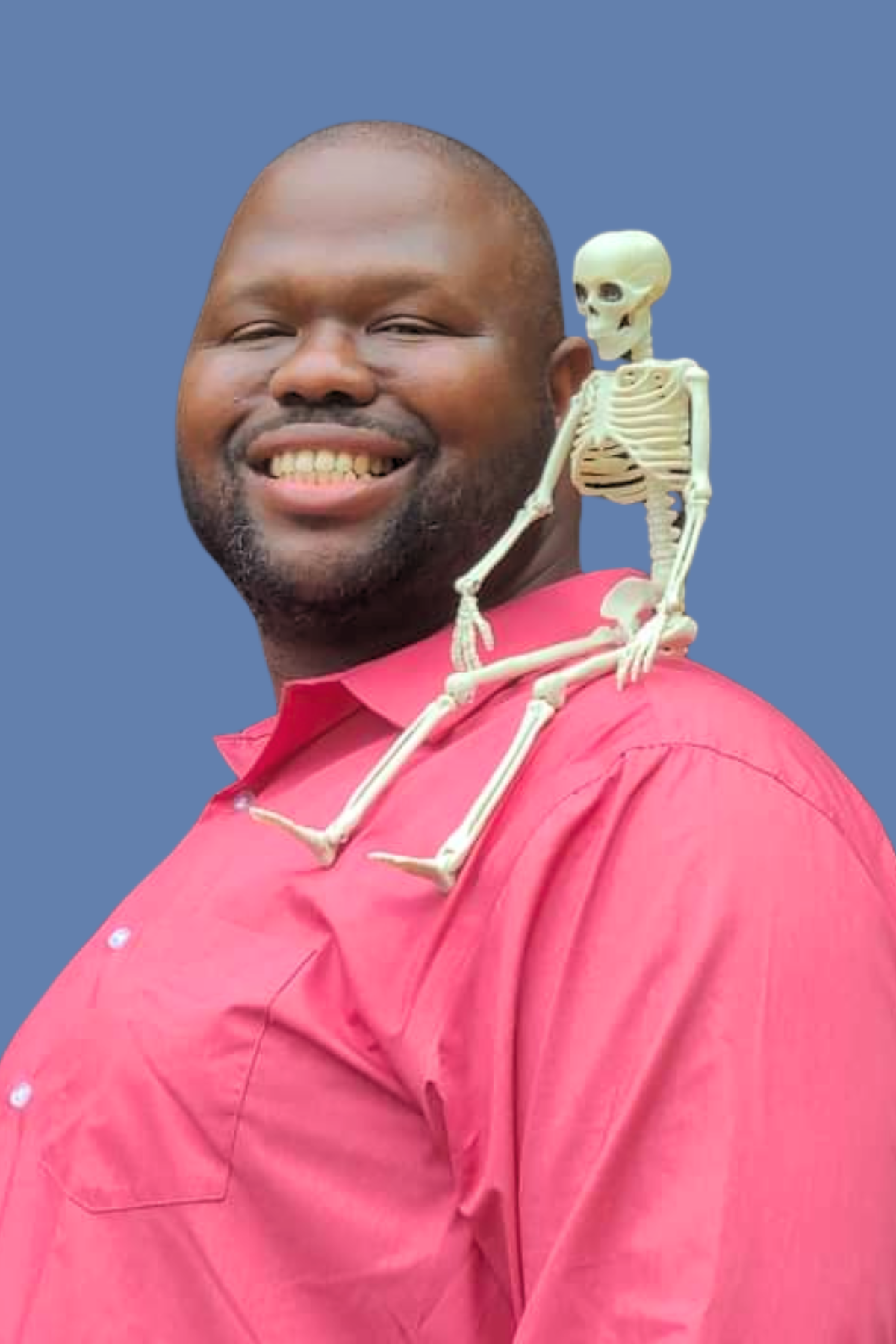
Waddell Hamer,
MSW, LSW

Waddell Hamer is a social worker specializing in motivational interviewing and trauma-informed cognitive behavioral therapy with children and adolescents struggling through depression, anxiety, and trauma. He has been a school-based and home-based life skills clinician with a focus on bridging services between the school and home settings, wraparound facilitator, home-based therapist through the pandemic, therapist for individuals who were victims of violent crimes, and social worker in a community health network. Outside of his professional work, he has worked to establish a NAMI community organization for mental wealth, integrates art and mental health in black and brown communities, and enjoys being the connector between people of his community. Waddell is a Licensed Social Worker with his Bachelors in Political Science and Masters in Social Work.
Looking for CEUs? Click "01 | Listen" below!

Project Thrive

Build an inclusive, proactive classroom that supports students with behavioral and mental health needs.
Join the next cohort to develop effective environments, behavior strategies, targeted instruction, essential collaboration skills, and more!
High-Leverage Practice #9:
Teach social behaviors.
Teachers should explicitly teach appropriate interpersonal skills, including communication and self-management, aligning lessons with classroom and schoolwide expectations for student behavior. Prior to teaching, teachers should determine the nature of the social skill challenge. If students do not know how to perform a targeted social skill, direct social skill instruction should be provided until mastery is achieved. If students display performance problems, the appropriate social skill should initially be taught, then emphasis should shift to prompting the student to use the skill and ensuring the “appropriate” behavior accesses the same or a similar outcome (i.e., is reinforcing to the student) as the problem behavior.
Empty space, drag to resize
Understanding that society is not monolithic… you have to be open to different cultural, socioeconomic, and familial norms.

waddell hamer

Empty space, drag to resize


Host: Heather Volchko

Guest: Waddell Hamer

For this high-leverage practice, we are talking about teaching social behaviors. Back with me this week, I've got Waddell, one of our social workers, and he is a strong advocate for social work being much larger than the couch. So I'm excited to see where this conversation goes. I'm kind of blending social work and classroom practices with the goal of teaching social behaviors. So, Waddell, for you in your practice, what does teaching social behaviors look like?

I'm glad you started off with talking about moving social work and therapy off the couch because I think what I try to do in my practice, but also just even places I look at, I try to... You have to think outside of the box when it comes to teaching social behaviors, when it comes to teaching the benefits of how can we get the kiddo to fit better within society? You have to think outside of the box.

Teaching social behaviors can be anything, like going into the community and like exposing that kid to different things. It can be anything from having conversations that the kiddos never even thought about, or no one has ever asked a kid about their opinion, or certain things in certain ways. Having the kiddo explain logic about what are the steps that you took to get to this?

And even though I work in an office or whatever, but even being creative within the office, one of the things I use a lot when it comes to learning how to make better decisions and stuff like that is chess. I use chess all the time. And if you're familiar with chess, it's a very slow game, and it's a lot of thinking. There's a lot of rules, a lot of components.

And I'll tell you what, you get a kid with ADHD that's in there, and sometimes those are the best chess players because here is a game that helps them slow down and think through their steps, think through their decision, think through why they do this or do that or whatever. So you teach-... You can have all the curriculum you want when it comes to social behaviors, teaching that stuff, or whatever.

Until you get that kid in front of you, you don't know what's going to work and what's not going to work. So you have to be creative. You have to be open-minded. You have to be willing to move and think outside of the box.

Yeah, I appreciate that you're saying it's bigger than the curriculum because, kind of like you're the advocate for, you know, therapy is bigger than the couch. Social instruction is so much bigger than the curriculum. And I know in education it's all what's the approved materials and resources, and what's, especially with the high leverage practice, the explicit instruction that goes with making this learning happen. And yes to all of that. I'm not arguing with that at all. But that's a foundation. That's part of it. It's not all of it.

And so it's like, how can we take that foundation and then move it in that direction of making that foundation relevant to that student or that group of students? From my background, I'm teaching social skills in whole class settings or, quote unquote, “small group settings”. I rarely ever got to do that one-on-one. And so yes, I need to have the curriculum. Yes, there's an aspect of that district approval piece, but then as we're walking it, we're making it relevant, we're pulling in those connections. I'm getting them to share their thinking. So then I can be like, “Oh, interesting. Because in the curriculum, it's written this way. But you're saying it's actually that way. Walk me through it.” Right? But we're almost like co learning while I'm still sort of guiding and facilitating all at the same time.

Yeah, I love that you said foundation. That's absolutely right. Because at the end of the day, you get in front of a classroom, or you get a kiddo in front of you, the curriculum will say, “Okay, you do this and then you say this and you say that. Then you ask this and you do this.” But you could throw that out the window when you get a kid in front of you, when you get a classroom in front of you, because you have no idea. I mean, I can't tell you how many times I'm like, “Okay, I'm going to do this and do this in session.” I get that kid in front of me, it's like, that's out the window.

Yeah. The number of times that I'm like, “Okay, so here's the scripted curriculum approach to learning this social skill.” Quite honestly, right now, I leverage a resource. It's just kind of a task analysis, it’s a breakdown of steps, so I don't have to teach it in a specific way as long as I'm teaching that process to walk through that skill. But regardless, we'll put up those steps and say there's four steps or five steps in this skill, and then we will talk through each one of them and be like, “How does this show up for you? Is it in this order? Isn't it a different order?” Because sometimes if it's in a different order, that's part of the challenge.

And so it's like, okay, let's move that around. But then by getting them to talk about it, exactly what you were talking about, it kind of slows them down, makes them actually think about some of those smaller pieces along the way as opposed to just the outcome. But to walk that with them… Yeah, there's no way I can walk into a situation and be like, I know exactly how this conversation is going because I don't know all their stories, all their experiences, what's going on in their head at any given moment. So when I start asking these open-ended questions like, how do you even perceive socialization types of questions?

And all of a sudden, we are off in left field. Like, I'm trying to-... We'll get through it, but I can't necessarily walk in with this beautiful little bow on my plan of how we're going to make it. It's like, can we get to that outcome together? Then that's a win. The methodology along the way is all kinds of stuff.

Yeah. I think that's where it's important for, of course, to talk about social work with the clinician, but like the behavior analyst, where I think it's important for you to always be flexible, always be open-minded. I never, never go in there with this idea that it's going to go a certain way or one way or the other or whatever. You also have to be open to different cultures and different parts of society, because what may be culturally appropriate for one may not be culturally appropriate for another.

And if we're going to be authentic in our work, you have to be open to just- And when I say cultures, I don't mean like race. Just race. I mean, like socioeconomic status. I mean, single-parent households versus two parent households. I mean, like athletic family versus non non-athletic family. There's so many things that you have to consider when I say consider culturally what works best for them. Because if I get a kid that plays basketball all the time and him and his father, they talk basketball, guess what? I'm gonna use basketball language to talk about how to behave better versus if I get a kid that hates sports and I go in there and talk about basketball, he's gonna look at me like “uhhhh”. You have to be open.

Well, and beyond even just like the examples you're pulling in, there are certain norms that come with some of those situations. And so if you're a strong athlete family, there's certain norms that show up in your daily life or maybe even how you view the world. Likewise, if you have a certain socioeconomic status, there are certain realities that you are working within, even if it may not be what you would desire or prefer; it's what it is. And so to be able to truly meet our people where they are, we have to honor that.

And then we work on those social behaviors within that context. Within then also that broader societal context, too.

Exactly. Exactly. Those are some of the things that I try to do whenever I get a kiddo in front of me and I'm thinking about Okay…- Honestly, I find it fun. It's kind of like a puzzle.

Yes, me too.

It's like, okay, how can I fit these pieces together to figure out what's going to work better for this kid and for this family? Let's try to figure this puzzle out, too. That's where being open-minded and being willing to think outside of the box, get off the couch, that's where that comes into place.

Well, before we wrap up this conversation this week, I want to see if we can open up a bit of a can of worms around this. I know that there is a group of people that are very anti-teaching social behaviors, and they have a lot of reasons on how they view even just the experience of being taught social behaviors, to not really be affirming to the individual or to not really allow them to just be who they are. And instead, we're trying to fit everybody into some version of some societal norm.

I know you run up against this, and I know you have some thoughts about this, too, so I'm curious to kind of hear your version. How do you conceptualize that? To say, yes, people can absolutely be who they are and own that and live their life and be in community and their little pockets of society in a way that's meaningful for them. And they can also be doing that in a way that is meaningful at that broader scale or societal level, too.

Lord, you are opening a can of worms.

I know.

I feel like sometimes I think about it like an assembly line, right? On an assembly line, let's say, you have a bunch of bolts and nuts going down the assembly line, and you have the quote-unquote “inspector”. And the inspector's job is to look and pick out what doesn't work. What's irregular for that pieces. And I'm always thinking about that. I always think about, like, yeah, it doesn't work for that particular machine, right? Or it may not work for that particular car or whatever, but doesn't mean that it doesn't work.

It doesn't mean that it doesn't work. It doesn't mean that it can't fit. So I think that's thinking outside the box. And understanding that society isn’t monolithic. I'm sorry, it's not. You know, no one particular culture, no one particular group of people. But we're not monolithic. There's 8 billion people on this planet. It’d be boring as hell if we were all the same. And don't get me wrong, I get, especially now, being in a profession, being older, I get structural necessities, work, or can function in a certain way within a certain structure. I get that. I get the need for it.

But saying that you don't fit a certain structure doesn't necessarily mean that you don't fit in society, because there's a lot of society to go around.

So that's... Does that answer your question? I'm kind of being abstract with it or whatever, but like, it's an abstract. I feel like it's an abstract way of thinking. You have to be.

Yes. And that's, I think, my personal frustration with some of that rhetoric is that it is so much bigger and there are so many interrelated pieces that are at play that it's not just this or that, yes or no, in or out. It is so much more complex than that. And so, you know me, I'm good to live in the abstract. There doesn't need to be some explicit answer or response because I lobbed the question pretty vaguely as well.

But I think even if it's useful to make it a little bit more practical, like something that I do when I'm teaching social skills, is we pull an example from in the classroom, we pull an example from in the building, and we pull an example from outside of the building. Because, quite frankly, sometimes I'm teaching social behaviors that are not relevant in all three settings, or they show up completely differently in all three settings, right? Like what it looks like in a self-contained classroom versus what it looks like at lunch, versus what it looks like on the street. Like they're going to show up in completely different ways. And there are some skills that then we say, “yeah, you're right, don't do that there”.

Right? And we'll walk through scenarios where we're like, “Yeah, that's really awkward. Please don't make that choice in that scenario. It doesn't fit. But it fits in other places.”

I think back to my example about chess, especially every piece on the board moves a certain way. Every piece on the board has a certain value. Every piece on the board can be advantageous at one point and a detriment at another point. You know, I love the fact that, the way chess is set up, if you get your pawn from one end of the board to another, it can become a queen. And everyone thinks, oh, the pawns are just like, you just flick them away, you just throw them away. They're not important.

But no, no, the pawns are just as valuable as the other pieces. And you have to be open to that. Unless you're open to that, you're going to be stuck in the box. And I'm sorry, society doesn't exist within the box. No matter how much we try, and trust me, we try very, very hard, no matter how much we try, society doesn't exist in a box.

I could not agree more. Thank you so much. I always enjoy talking about these things with you, so thanks for taking the hard questions and walking down the murky road with me for a minute as well. Thank you so much for sharing your expertise.

Absolutely no problem.

Empty space, drag to resize
You have to think outside of the box when it comes to teaching social behaviors… It can be anything from community exposure to using games like chess to help students learn decision-making.

waddell hamer

Empty space, drag to resize

One of the significant challenges students with disabilities face is navigating social interactions with both adults and peers in appropriate ways. Regardless of a student’s specific disability or the primary focus of their individualized education program (IEP), incorporating social skill instruction into the daily curriculum is essential. Just as we teach academic skills, social skills require direct, explicit instruction, repeated practice, and positive, specific feedback when students demonstrate the targeted behaviors.

Effective social skill instruction relies on several key components validated by research. These include assessing and identifying students' social skill patterns, using a structured "tell-show-practice" approach, and evaluating students’ mastery and ability to generalize these skills across various settings. While many quality social skill curricula exist, they often assume that students have a skill “deficit,” meaning they don’t know how to perform the appropriate behavior. This approach may be suitable for students with moderate to severe disabilities, such as autism spectrum disorder or intellectual disabilities. However, for students with mild disabilities, social skill challenges are more often “performance” problems. These students know what social skills they should use, but may choose inappropriate behaviors because these behaviors lead to outcomes that reinforce the problem, such as avoiding uncomfortable situations.

To be effective, social skill instruction must match the lesson focus to the student's specific challenge, whether it’s a skill deficit or a performance issue. Teachers should first identify and define the social skill and clarify when it should be used. Then, they should discuss the emotions or triggers that lead to inappropriate behavior, demonstrate both correct and incorrect responses, and have the student practice the appropriate behavior through role-playing.

Teaching social skills in a small group setting is generally effective, but the real challenge lies in helping students generalize and maintain these skills over time and across different environments. Strategies such as teaching within the actual settings where the skills will be used, providing frequent prompts or reminders, and offering high rates of specific positive feedback are all critical for ensuring that students can apply their social skills successfully beyond the classroom. These approaches, grounded in empirical research, are crucial for fostering lasting social success in students with disabilities.

Many students with disabilities, particularly those with emotional or behavioral disorders, autism spectrum disorder, and other low-incidence disabilities, face significant social skill deficits that impact their ability to fully engage in school and community settings alongside their peers. Special educators play a crucial role in identifying these key skill gaps and developing explicit instruction plans to teach social skills to mastery.

Social behaviors encompass various domains, including communication with peers and adults, self-management, and following classroom expectations. Teachers who establish consistent, organized, and respectful classroom environments (HLP 7), use diverse data sources (HLP 4), and collaborate with colleagues (HLP 1) and families (HLP 3) are well-prepared to implement these practices effectively. However, it’s the strategic use of explicit instruction (HLP 16) combined with high-quality feedback (HLP 8/22) that truly enables students to learn and apply new social behaviors. This approach not only teaches students how to use these social skills but also provides them with the feedback needed to gauge how well they are meeting expectations, fostering both academic and social success.

Teachers who effectively teach social skills take a systematic and proactive approach. They begin by identifying students with social skills deficits, drawing from a variety of data sources, including systematic screeners, schoolwide disciplinary referrals, classroom observations, and input from families. This comprehensive data collection allows educators to pinpoint the specific types of social skills deficits, such as challenges in problem-solving, communication, or conflict management.

Once these deficits are identified, teachers develop targeted social skills groups, organizing students based on commonalities in their needs. Instruction is then tailored to address these specific skills, with complex behaviors, like resolving peer conflict, being broken down into smaller, teachable steps. This method ensures that students experience success at each stage of learning.

Teachers also consider the various contexts in which social skills are required, designing examples, non-examples, and role-playing scenarios that help students generalize their skills across different environments. These examples are crafted with attention to students' cultural backgrounds, ages, and natural environments, ensuring relevance and effectiveness. For instance, when teaching greeting behaviors, teachers might include scenarios ranging from formal business handshakes to casual verbal greetings among friends.

Effective instruction in social skills mirrors the core components of academic lesson plans, with a focus on teaching, modeling, and practicing the desired behaviors. All students are engaged throughout the lesson, with tasks designed to maintain their attention and participation. Mastery is promoted through the use of positive and corrective feedback that is immediate, consistent, and specific. Scaffolded supports are gradually faded as students become more independent in their use of social skills.

To ensure that students can apply their newly acquired skills across various settings, teachers provide opportunities for practice in different authentic contexts. Progress is constantly monitored, with teachers analyzing students' responsiveness to instruction and making adjustments as needed to support ongoing development.

School leaders have a vital role in empowering teachers to teach social skills effectively. One way they can do this is by offering instruction, professional development, and coaching tailored to help teachers master effective instructional practices for social skills. This involves teaching educators how to use various data sources to identify students who need social skills instruction, ensuring that the identification process is thorough and accurate.

Leaders should also support faculty teams in grouping students based on common social skills needs. By providing additional supports like lesson development and curriculum materials, leaders can ensure that teachers have the resources they need to deliver effective instruction. Regular meetings focused on progress monitoring and data collection are crucial, as they give teachers and teams the opportunity to evaluate student progress and address any emerging needs among staff.

If the school has established a set of school-wide expectations, leaders can guide teachers in linking their social skills lessons to these expectations. This helps ensure that lessons are consistent with the broader school environment, making it easier for students to generalize and apply what they learn across different settings.

Interacting effectively with adults and peers, along with managing one's own behavior, is crucial for student success. However, students with disabilities often face unique challenges in mastering these social skills, unlike their typically developing peers. This makes explicit instruction in social skills not just beneficial, but essential. 

Research shows that social skill instruction is effective across various stages of development, from preschool through adulthood, and benefits students dealing with a range of social skill challenges and disabilities. The evidence strongly supports that when social skill instruction is combined with strategies to help students generalize these skills to different contexts, it significantly enhances their social-emotional functioning.

Empty space, drag to resize

Little Bits of TLC Blog

The Impact of Teaching Social Behaviors on Student Learning
Write your awesome label here.